

Managing Interocclusal Transfer Errors in Full-Arch Fixed Prosthodontics Using High-Rigidity Addition Silicone
1. Clinical Baseline & Patient Presentation
A 62-year-old male presented with generalized severe occlusal attrition, secondary to long-term bruxism and localized acid erosion. Comprehensive diagnostic evaluation revealed a significant loss of vertical dimension of occlusion (VDO), unstable centric occlusion, and localized compensatory alveolar eruption in the mandibular anterior segment.
The approved definitive treatment plan required a comprehensive full-mouth rehabilitation, consisting of 14 units of monolithic zirconia crowns and fixed partial dentures across both arches. The primary clinical objective was to restore the patient's anatomical VDO by 3.5 mm and establish a stable, reproducible Centric Relation (CR) to alleviate muscular fatigue and joint strain.
2. The Interocclusal Challenge & Technical Bottlenecks
The defining technical obstacle in full-arch rehabilitation lies in the absolute precision of the maxillomandibular relationship transfer from the chairside to the laboratory articulator. In this specific case, three distinct structural risks were identified:
- The Cushion/Compression Effect: Standard vinyl polysiloxane (VPS) dental impression materials often retain slight elastomer elasticity. When the stone casts are articulated under manual pressure in the lab, these records compress microscopically, leading to a decreased VDO on the articulator and subsequent "high bites" during delivery.
- Mandibular Deviation: Due to the patient's chronic muscle splinting from bruxism, holding an unguided, strained mandibular position for more than 90 seconds invariably caused neuromuscular fatigue and micro-shifting.
- Cross-Border Logistics Hazards: The physical stone models and bite records were scheduled for cross-border transit to a specialized digital milling facility, rendering traditional wax plates completely useless due to thermal warping and creep deformation.
3. Diagnostic Justification for Advanced VPS Selection
To mitigate the risks of vertical displacement and transport deformation, the clinical team bypassed conventional waxes and flexible polyethers. The treatment protocol required an advanced addition-cure Bite Registration Material optimized specifically for rigid maxillomandibular fixation.
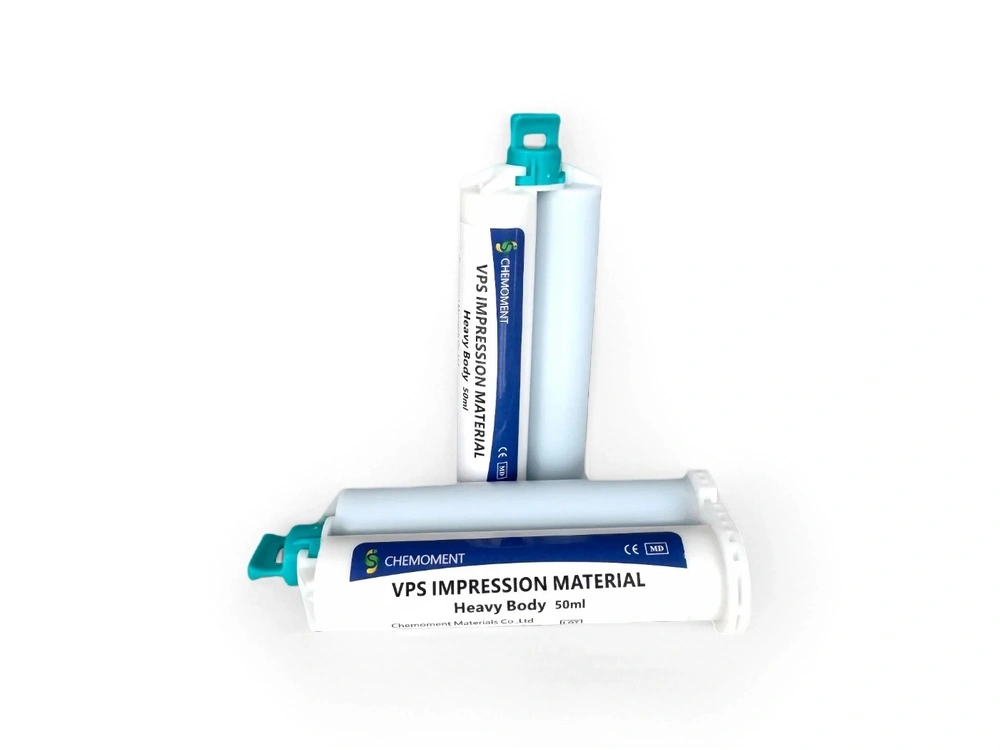
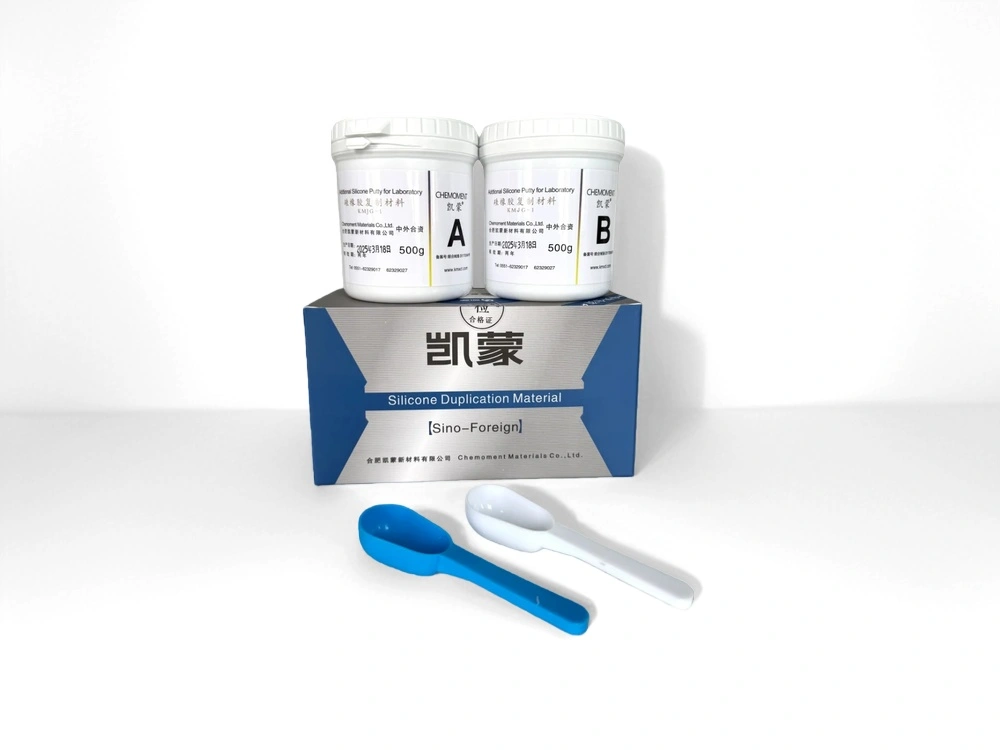
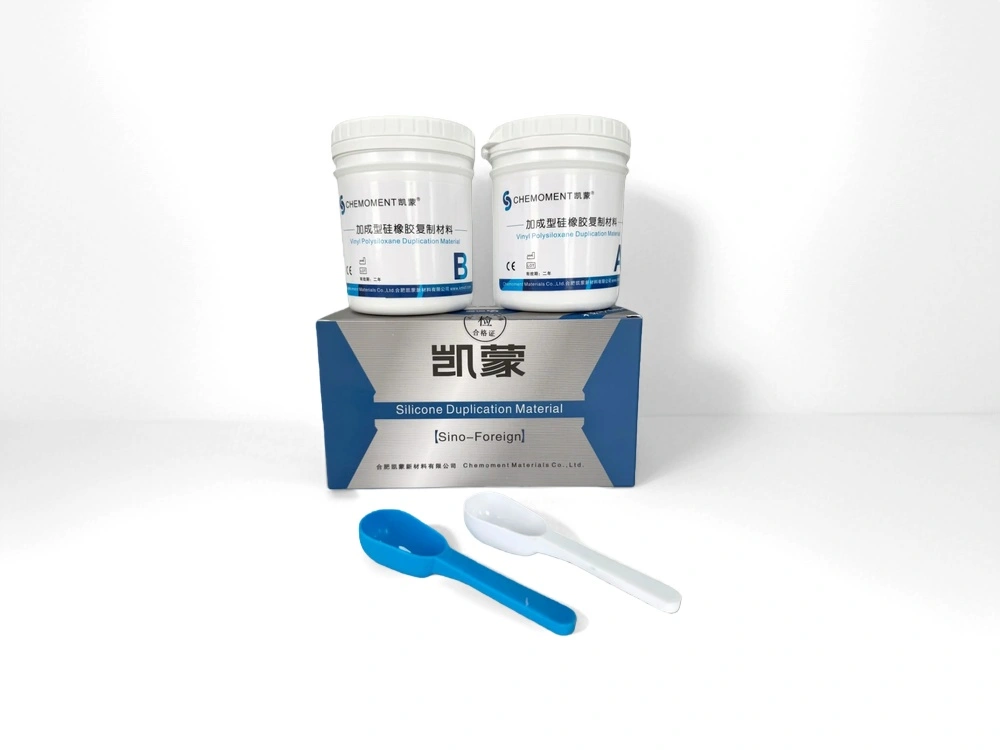
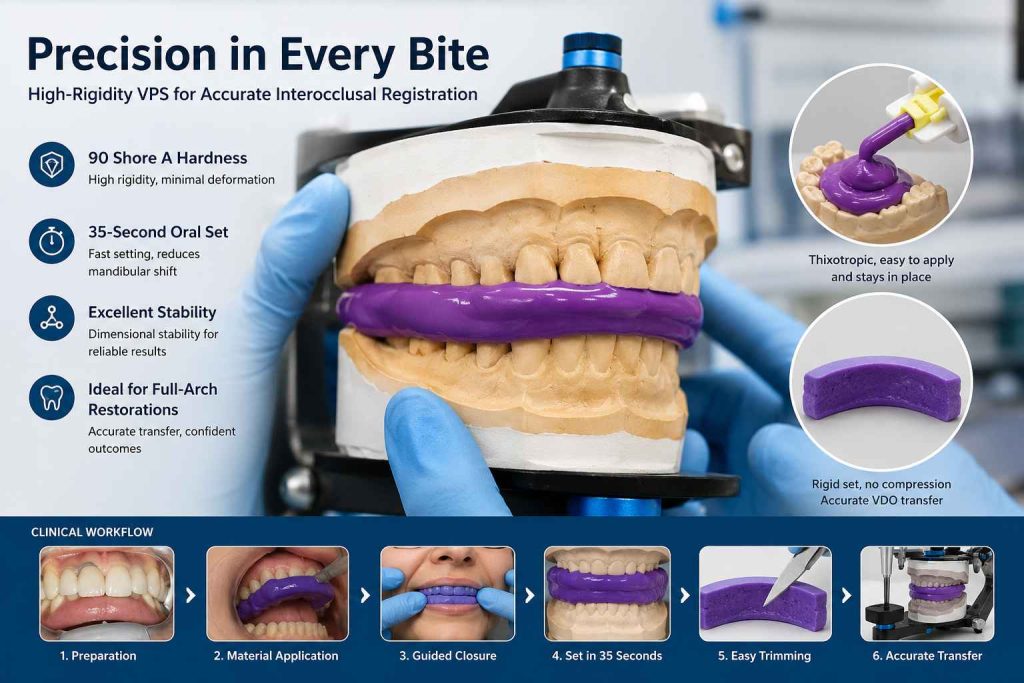
The selection of the Chemoment formulation was predicated on its specific polymer cross-linking chemistry. By engineering a final hardness profile of 90 Shore A, the material transitions from a fluid state into an unyielding, rigid matrix that completely eliminates compressive rebound. Furthermore, its rapid-setting snap polymerization (35-second intraoral cure) was selected as a direct countermeasure against patient-induced mandibular drift.
4. Step-by-Step Clinical Implementation

Following final crown preparations and the verification of tissue retraction across both arches, the interocclusal recording was executed through the following structured protocol:
- Decontamination: All abutment teeth and opposing occlusal surfaces were thoroughly washed, isolated with cotton rolls, and gently air-dried to eliminate any salivary film that could compromise surface detail replication.
- Thixotropic Deposition: Utilizing a standard 1:1 dual-cartridge dispensing gun, the Chemoment VPS material was extruded directly onto the mandibular occlusal surfaces. The material's optimized thixotropy allowed it to stack cleanly on the cusp tips without slumping into the buccal vestibules or lingual floor.
- Guided Closure: The clinician utilized a modified bimanual manipulation technique to gently guide the patient's mandible into the predetermined Centric Relation at the restored VDO.
- Intraoral Polymerization: The patient maintained the jaw position effortlessly. Due to the material's temperature-accelerated snap chemistry, it reached complete rigid polymerization within 35 seconds of intraoral contact.
- Ex-Vivo Trimming: The set record was removed without distortion. Excess flash extending into undercuts was trimmed cleanly using a standard #15 scalpel blade. Due to the 90 Shore A hardness, the material shaved smoothly without crumbling or tearing.
5. Quantitative Outcomes & Clinical ROI
The definitive zirconia restorations were fabricated utilizing the rigid Chemoment VPS record as the baseline for digital scanner articulation. The clinical outcome demonstrated substantial quantitative benefits:
| Clinical Metric Evaluted | Traditional Elastomer History | Chemoment VPS Outcome |
|---|---|---|
| Chairside Occlusal Adjustment Time | 35 - 50 minutes per arch | < 4 minutes (Zero-adjust on post. teeth) |
| Vertical Dimension Error (VDO) | 0.4 mm – 0.8 mm compression deviation | 0.02 mm (Within ideal clinical tolerance) |
| Post-Operative Remake Rate | Estimated 8.5% due to laboratory warping | 0% (Flawless cross-border model transfer) |
At the 12-month post-operative follow-up appointment, the patient reported complete resolution of localized muscular pain, comfortable chewing kinematics, and zero joint tenderness. By eliminating physical deformation during the laboratory phase, the clinic achieved a highly optimized workflow, drastically reducing chairside crown-delivery time and maximizing patient satisfaction.
For dental purchasing departments, clinical directors, or distribution partners seeking high-precision impression systems certified by CE and FDA standards, please connect with our global support division via the Contact Us channel.