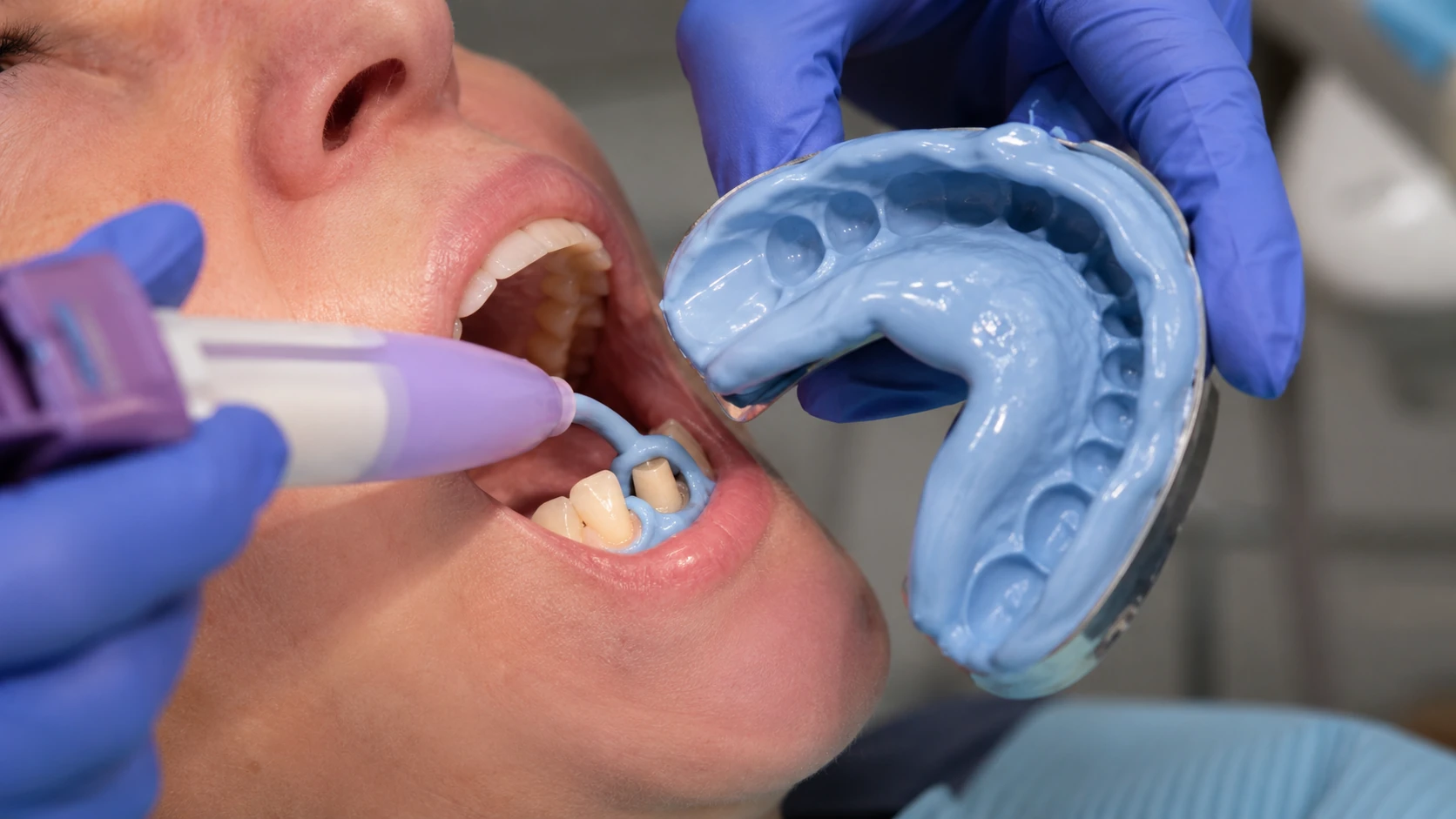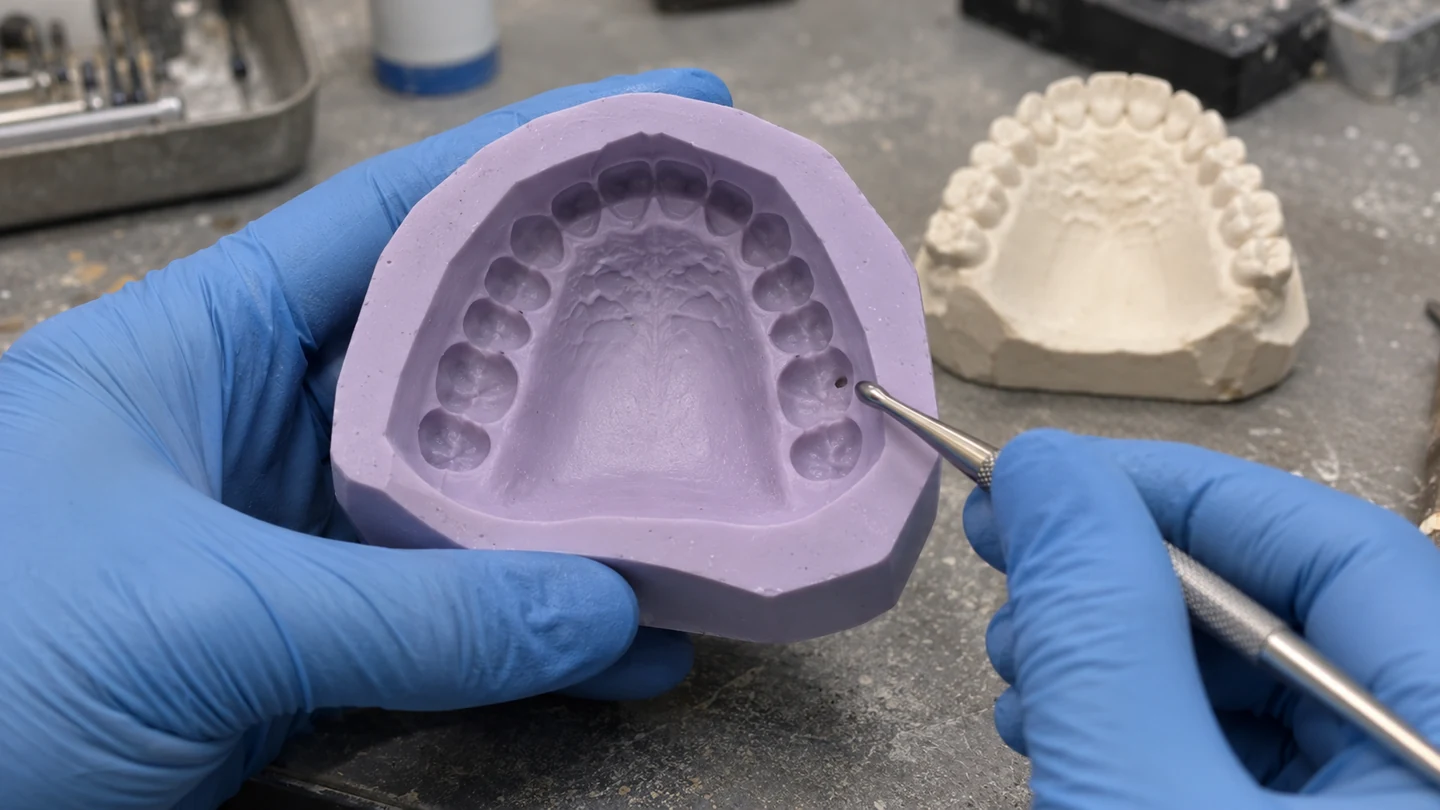
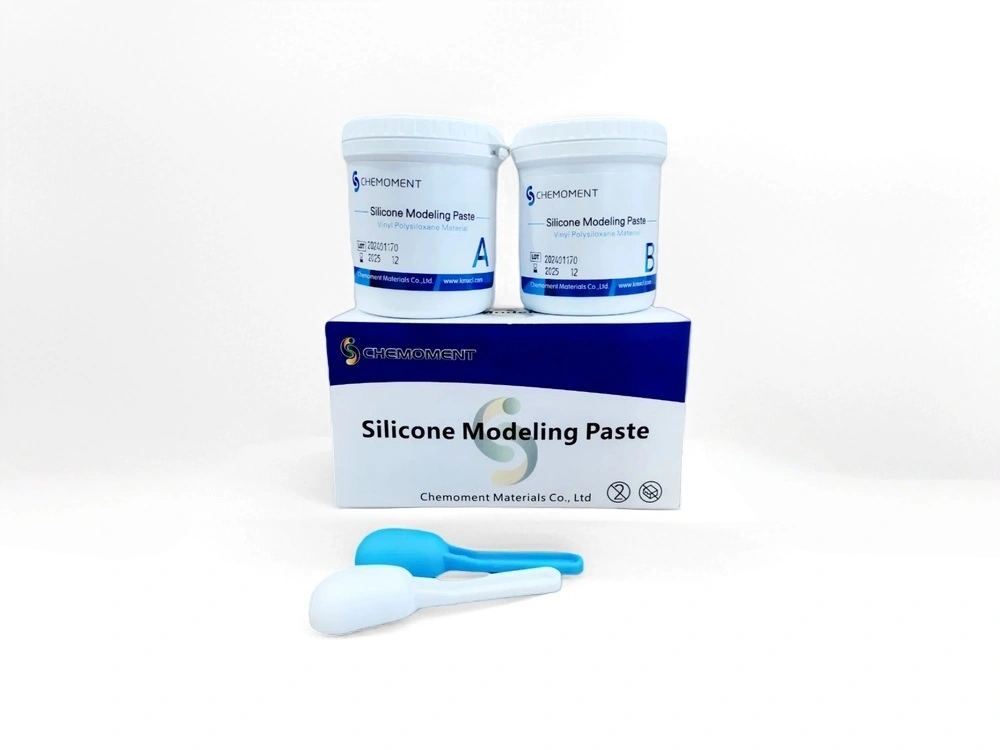
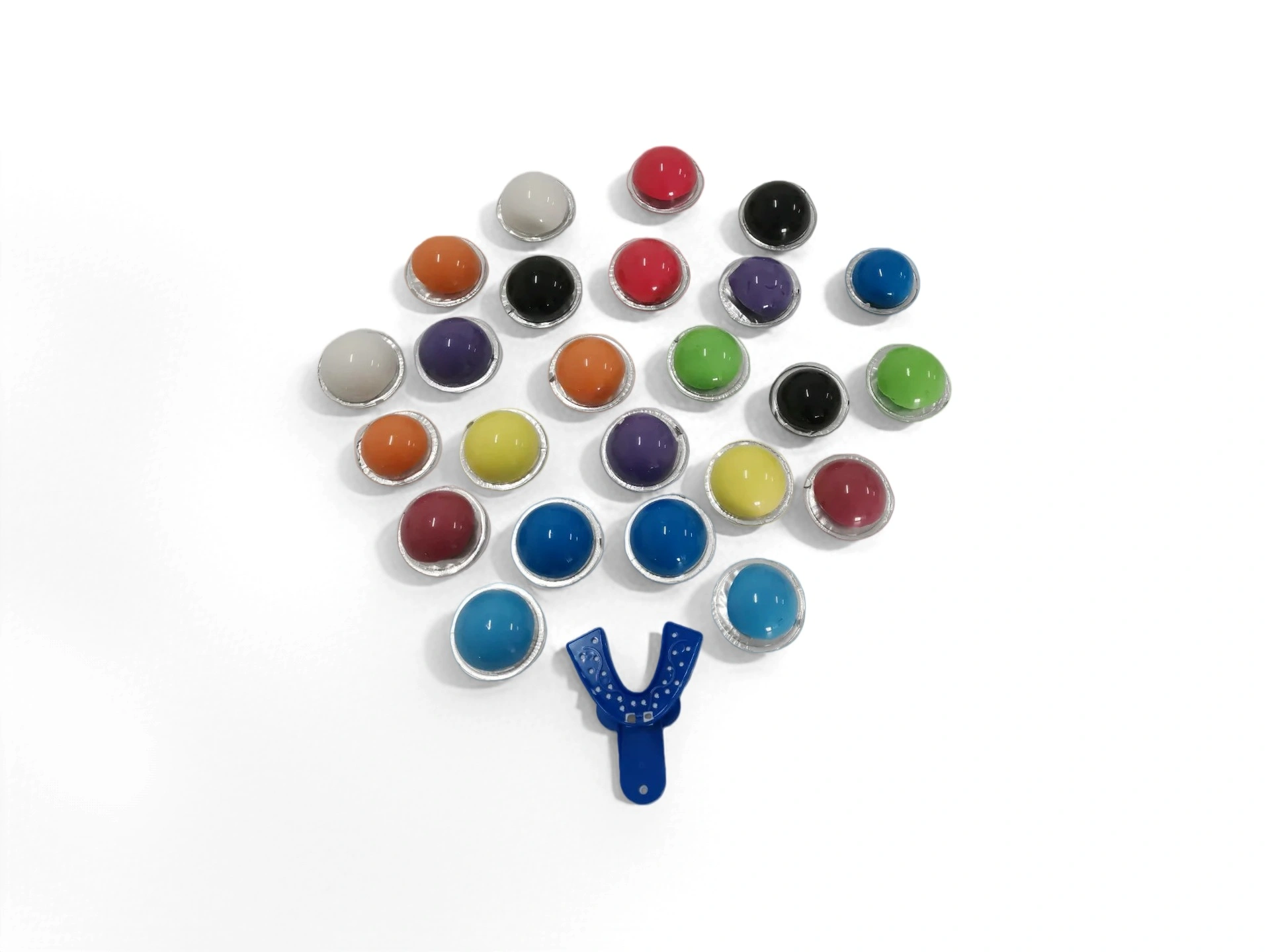

Quick answer: When a dental distributor or private-label buyer requests a custom VPS/PVS or dental laboratory silicone, working time and hardness should never be approved from two numbers alone. Confirm the start and end points of the timing test, the temperature, the mixing or cartridges system, the hardness scale, specimen preparation, time after mixing, cure conditions, acceptable range and batch-to-batch consistency. The supplier should also show that those changes do not weaken tear strength, elastic recovery, detail reproduction or dimensional stability.
Which existing product should the customization be tied to?
A custom working time or hardness should be requested against a defined product and intended workflow. This checklist applies to the current customizable ranges below; it is not a separate generic “custom VPS” product.
| Product family | Typical customization review |
|---|---|
| Hydrophilic VPS putty | Manual-mix handling, working time, setting time, Shore A hardness and pack size |
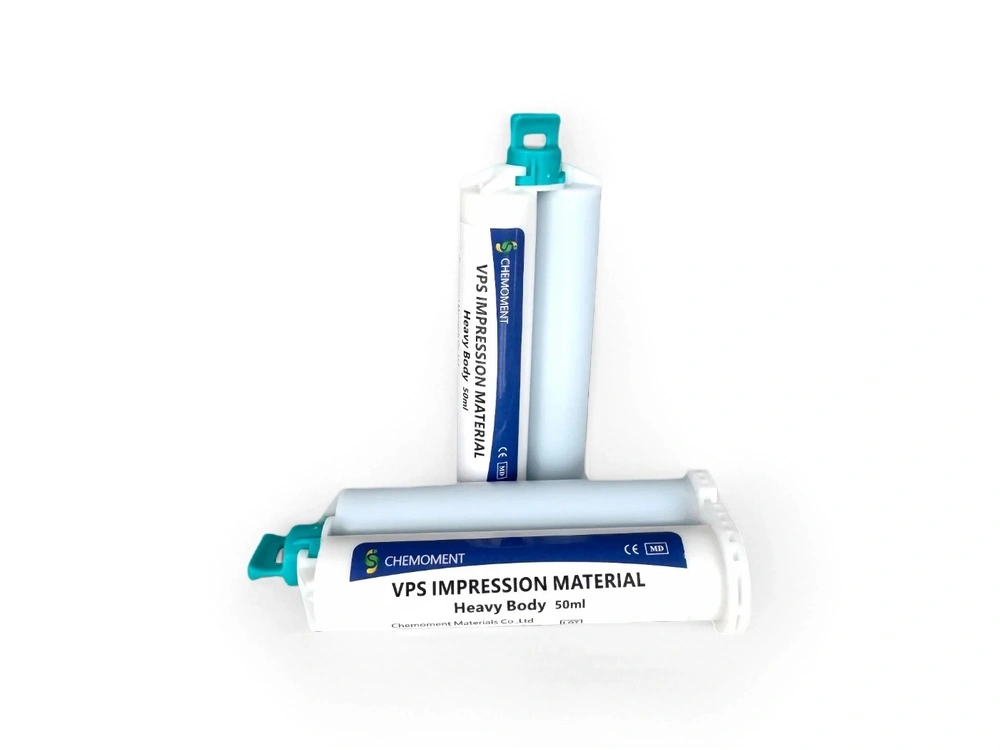
| Heavy-body VPS | Automix flow, tray support, working time, setting time and cartridge compatibility |
| Medium-body VPS | Monophase handling, flow under pressure and hardness |
| Light-body VPS | Wash flow, detail reproduction, working time and tear behaviour |
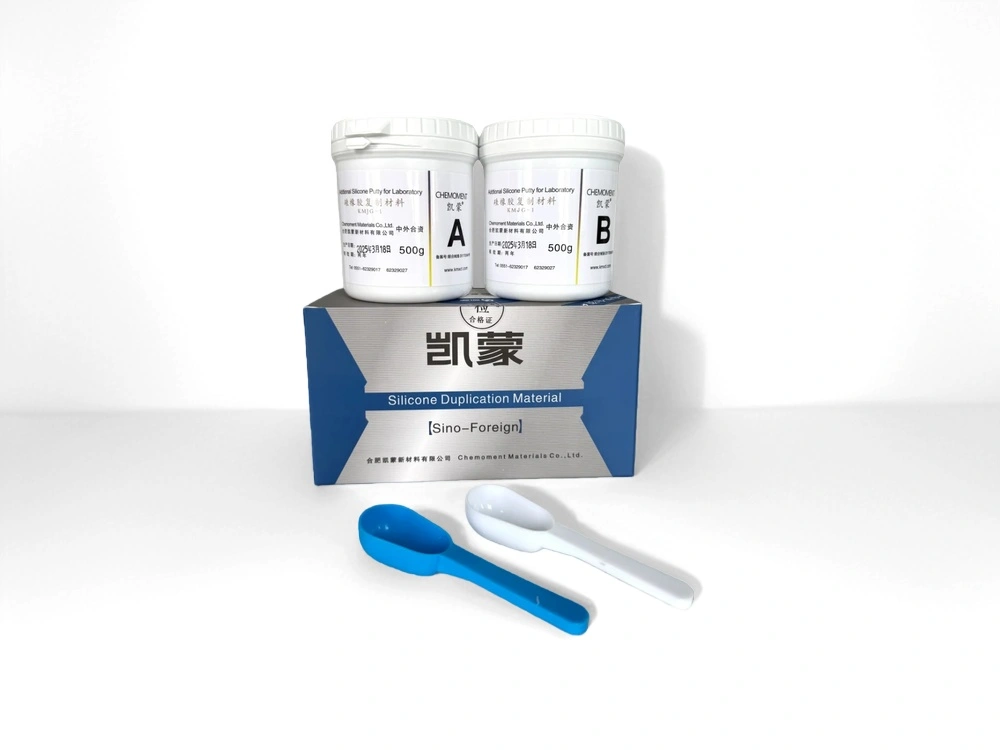
| Dental laboratory addition silicone | Laboratory handling, high hardness, bulk packaging and model compatibility |
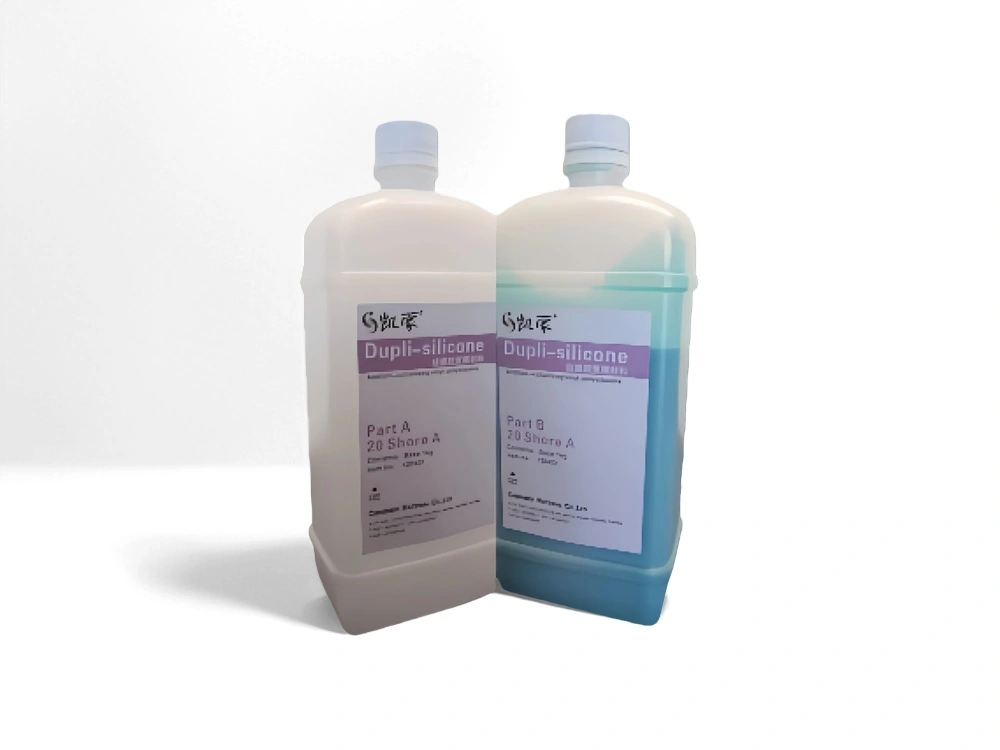
| Dental duplication silicone | Longer working window, low hardness, elastic recovery and deaeration |
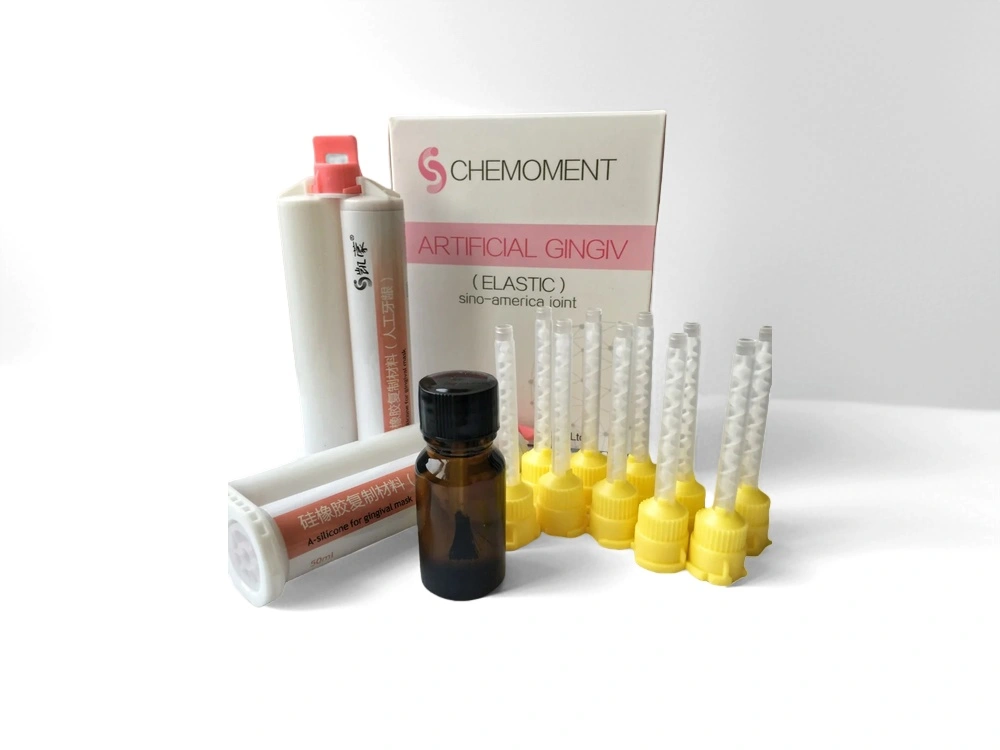
| Gingival mask silicone | Elastic or rigid hardness, removal path, setting time and polishability |
Why “working time” and “hardness” need a written definition
Two suppliers can report the same working time and Shore A hardness but deliver materials that behave differently in a clinic or dental laboratory. One may start timing when the components first meet; another may start after one full mixing stroke. One may measure hardness after 10 minutes, while another tests a fully conditioned specimen after 24 hours.
For a custom order, the useful specification explains how each value was measured, not only what the value is. It should also state whether the requirement applies to the mixed paste, a cured specimen, a finished impression or a laboratory mold. These are different test objects and cannot be treated as interchangeable.
Separate the full working and handling window
Working time is the period during which the material can still be mixed, loaded, injected and seated as intended. It should not be confused with setting time or the later point at which a technician can safely demold a part. Record the end of the usable handling window, the time at which the material can be removed safely and the final cure reference as three separate checkpoints.
| Timing point | What the buyer should define | Why it matters |
|---|---|---|
| Timing zero | First contact of A and B, start of mixing, end of mixing or cartridge insertion | A 10-second difference in the starting point can change the approved result. |
| End of working time | Last point at which the material remains usable for the specified operation | Injection, tray seating and laboratory cavity filling require different flow behaviour. |
| Safe handling time | When the operator can remove, trim or place the part without distortion | Users often confuse this point with complete cure. |
| Full-cure reference | Time and conditions before hardness or dimensional-property testing | Early hardness readings can make a material appear softer than the fully cured product. |
Test conditions should be stated with the result. Good practice is to test at documented laboratory conditions, for example 23 ± 2 °C and controlled humidity. If the product is used inside the mouth, also confirm how body temperature affects the usable window. Automix performance should be tested with the intended cartridge, mixing tip and dispenser because manual mixing and automix systems can differ in air entrapment, shear and heat.
Define hardness before quoting a Shore A number
Hardness affects bite registration, gingival masks, duplication molds and impression materials in different ways. A material that is ideal for a flexible gingival mask may be too soft for a stable bite record, while excessive rigidity can create removal and distortion problems elsewhere.
The hardness requirement should include:
- the measurement scale, such as Shore A or another scale actually used in the target market;
- the specimen thickness, preparation and conditioning method;
- the time after mixing and the full-cure schedule;
- temperature and humidity during testing;
- the number of readings, measurement positions and how the reported value is calculated;
- the approved tolerance, not only a nominal value.
Do not compare values from different scales or assume they can be converted accurately. Also distinguish surface hardness from overall handling performance. A product can pass a hardness test while having poor elastic recovery, low tear resistance or unstable dimensions. For products that must resist tearing or removal distortion, review the purchase test alongside the causes of VPS tearing and distortion.
Confirm the properties that the customization may affect
Working time and hardness are system outcomes. Adjusting cure speed, crosslink density, filler loading or rheology can influence other properties. The supplier should therefore provide a combined performance profile rather than an isolated change request.
| Parameter | Questions for the supplier |
|---|---|
| Mix ratio and dispensing | Is the product supplied in 1:1 cartridges, jars or bulk containers? Which mixing tips and dispensers were validated? |
| Consistency and flow | How does the material behave when injected, seated under pressure or poured around a model? |
| Elastic recovery | After deformation and removal, how quickly and completely does the material return to shape? |
| Detail reproduction | Can the material reproduce fine margins, surface texture and small laboratory features under the agreed technique? |
| Dimensional stability | How much does the material change between demolding, shipment and casting or scanning? |
| Tear and tensile strength | Does the custom formula remain robust around thin margins, undercuts and automix mixing-tip transitions? |
| Hydrophilicity and wettability | Does the material handle moisture and pour or scan as expected in the intended application? |
| Tray or substrate adhesion | Was compatibility checked with the intended tray type, adhesive or model material? |
Application context should be written into the specification. A custom clinical impression material, bite-registration material, duplication silicone and gingival mask silicone do not share the same optimum hardness or handling window. Buyers should not approve one generic “soft” or “hard” grade for several unrelated procedures.
If the customized silicone will contact a 3D-printed resin model, also review why addition silicone may fail to cure on printed resin models before approving the sample procedure.
Use a controlled sample test before production approval
A practical qualification plan should compare the proposed custom material with the current control using the same operators, instruments, cartridges, tips, temperature and test methods. Record results for at least three production batches. A single successful sample does not demonstrate that the process is consistently controlled.
- Define the application, procedure and failure that the customization is intended to solve.
- Write the test method and acceptance range before seeing the results.
- Test the control and custom samples side by side.
- Check working time, setting and handling time, hardness and the other critical properties on the same batches.
- Run the material through the actual packaging and dispensing system.
- Repeat the test at the upper and lower temperatures expected in storage and use.
- Record batch numbers, operators, equipment, environmental conditions and raw results.
- Approve the material only after the supplier provides limits for routine production and a documented response to out-of-limit results.
Ask for raw data as well as a summary range. A report that says “working time: 60 seconds” without sample size or method is not enough for a distributor qualification file.
What to include in the RFQ
A clear RFQ reduces back-and-forth and gives the supplier a testable target. Include the following information:
- Application: impression, bite registration, duplication, gingival mask or another dental-lab use.
- Working system: manual mixing, 1:1 automix cartridge, bulk dispensing or another process.
- Required window: minimum and maximum working time, setting or safe handling time, and full-cure reference.
- Hardness: scale, target, tolerance, specimen method and measurement time.
- Performance priorities: tear resistance, elastic recovery, flow, hydrophilicity, dimensional stability or model-material compatibility.
- Use environment: expected room temperature, body-contact conditions, storage conditions and transport route.
- Packaging and private label: cartridge size, mixing-tip compatibility, artwork, language and shipping configuration.
- Markets and documents: target countries, required certificates, TDS, SDS, CoA, shelf-life statement and change-notification requirements.
- Commercial limits: annual demand, launch quantity, minimum order quantity and forecast variability.
Buyers sourcing a complete portfolio can review our dental laboratory addition silicone range and ask for the material family closest to the intended application before requesting a custom adjustment. Buyers comparing cure chemistry should also review addition versus condensation silicone, because a platinum-catalyzed addition system has different contamination and process requirements.
Quality documents and change control
The approved specification should become part of the purchase agreement. It should define which changes require written notice and re-qualification. A change in raw-material source, filler, platinum catalyst, packaging, mixing-tip design or production equipment can affect a custom product even when the nominal working time and hardness remain the same.
Ask the supplier to provide:
- the controlled technical datasheet with test methods and typical values;
- a certificate of analysis showing measured results by batch;
- shelf life, storage and transport requirements;
- packaging and dispenser compatibility information;
- documented change notification and sample-retention practice;
- the regulatory and safety documentation required in the destination markets.
A useful supplier relationship is not based on a promise that every formulation can be changed without compromise. It is based on transparent test data, a defined operating window and a willingness to revalidate the complete material system.
Frequently asked questions
Can a supplier make a longer working time without changing final hardness?
It may be possible, but it must be demonstrated on the finished formula and process. The buyer should ask for side-by-side data on working time, setting or handling time, hardness, elastic recovery, tear strength and stability. A satisfactory result on one property does not prove the others are unchanged.
Should working time be tested at room temperature or mouth temperature?
Test the conditions that represent the actual process. Intraoral materials may need both room-temperature handling data and a separate body-temperature assessment. Dental laboratory materials should be tested at the temperature at which they are mixed, poured and demolded.
Why do the supplier’s hardness result and the laboratory’s result differ?
Common reasons include different timing after mixing, specimen thickness, backing, conditioning, scale, measurement location and degree of cure. Compare the written methods before concluding that either material is out of specification.
Is a softer material always easier to remove?
No. Removal depends on tear strength, elongation, elastic recovery, undercuts and the amount of material engaged. Hardness alone does not predict safe removal or accurate recovery.
How many batches should a buyer test?
At least three production batches are a practical starting point for a qualification review. Higher-risk applications, regulated markets or highly customized products may require a larger sample and a formal validation plan agreed with the supplier.
Bottom line: Customize against a complete, testable specification. Confirm the measurement method, the intended use, the full handling window and every coupled performance property before approving a working time or hardness change.