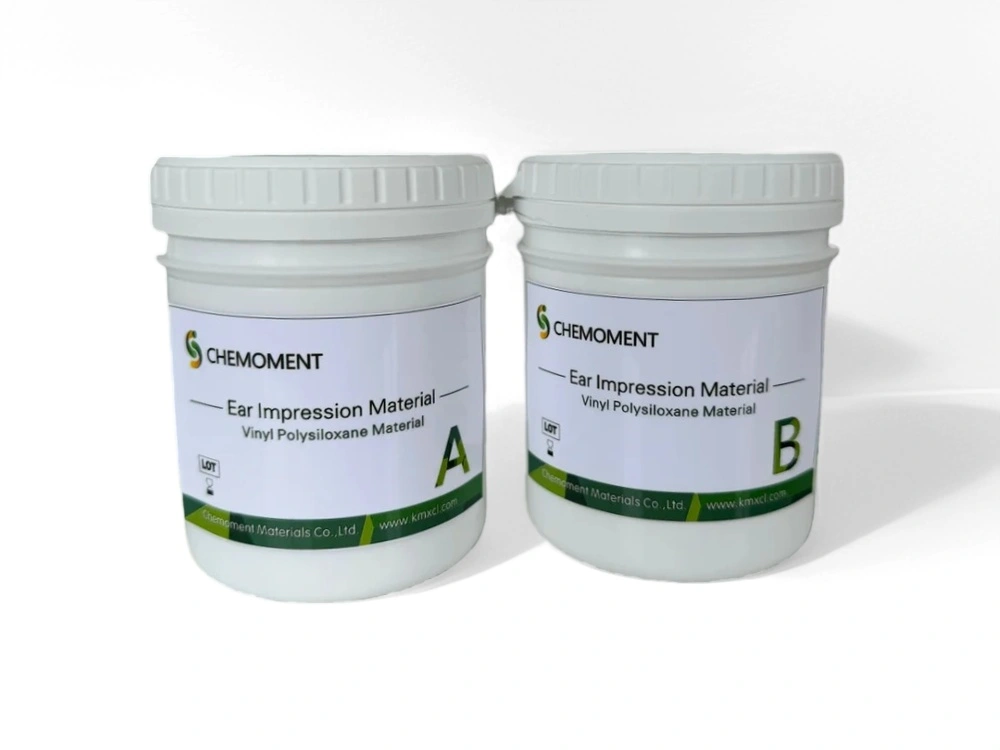
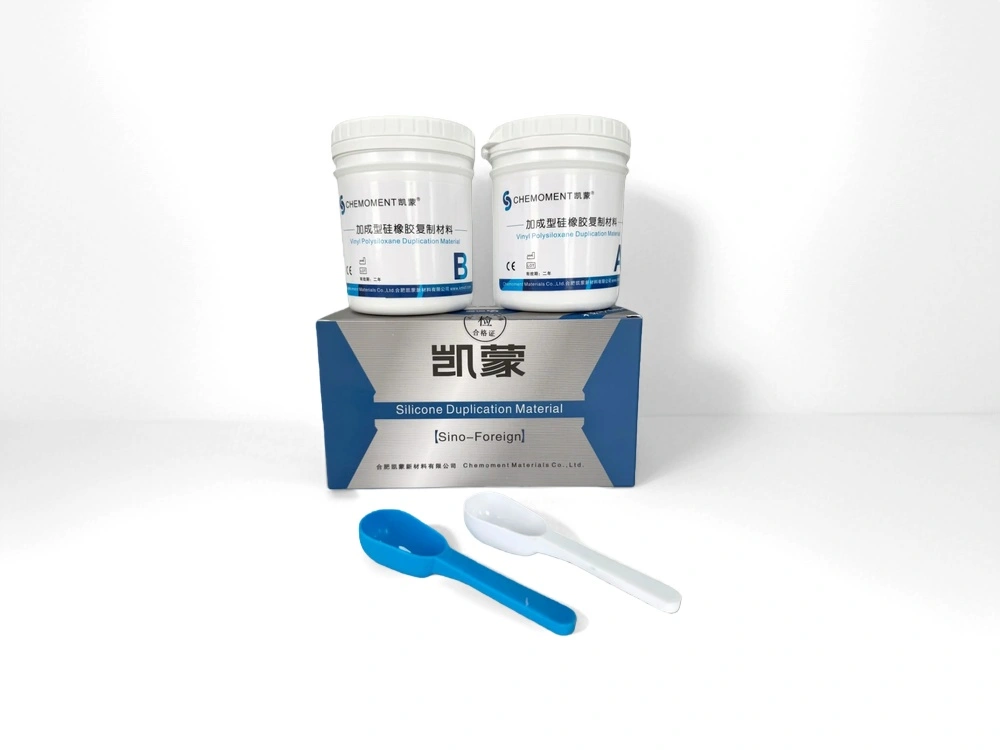

Quick answer: Choose dental impression and laboratory silicone by workflow first, then by viscosity, working time, setting time, hardness and packaging. For crown and bridge work, a light-body wash is normally paired with putty or heavy body. Bite records need a separate high-hardness material. Dental duplication, gingival masks and laboratory putty are different products and should not be presented as interchangeable impression materials.
This guide covers the addition-cured VPS/PVS and specialty dental silicones that Chemoment manufactures. It does not treat alginate, polyether or bis-acryl as equivalent replacements because those materials answer different clinical and purchasing needs.
Start with the workflow, not the product name
| Workflow | Material normally considered | What the buyer should confirm |
|---|---|---|
| Crown and bridge impression | Light-body VPS with putty or heavy-body tray material | Wash viscosity, working time, tray support, wetting, tear resistance and removal from undercuts |
| Single-viscosity or monophase technique | Medium-body VPS | Flow under pressure, seating resistance, working time and fine-detail reproduction |
| Occlusal record | High-hardness bite-registration VPS | Low closure resistance before cure, rapid setting, final hardness and dimensional stability |
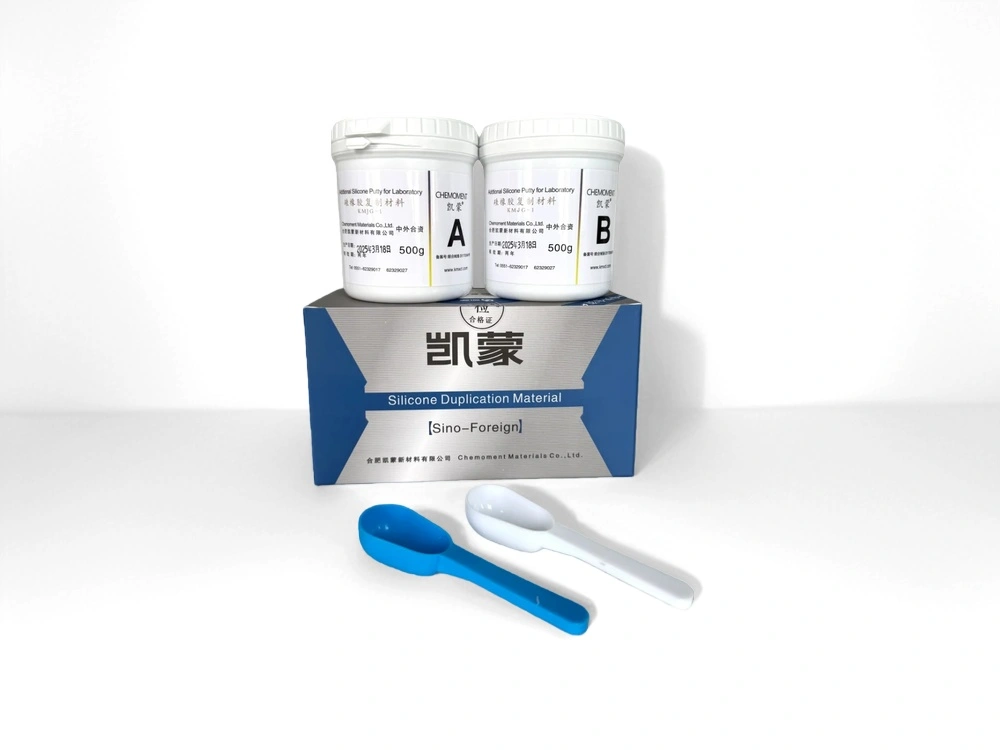
| Dental laboratory model work | High-hardness laboratory addition silicone | Mix ratio, pack size, Shore A hardness, working time and compatibility with the model process |
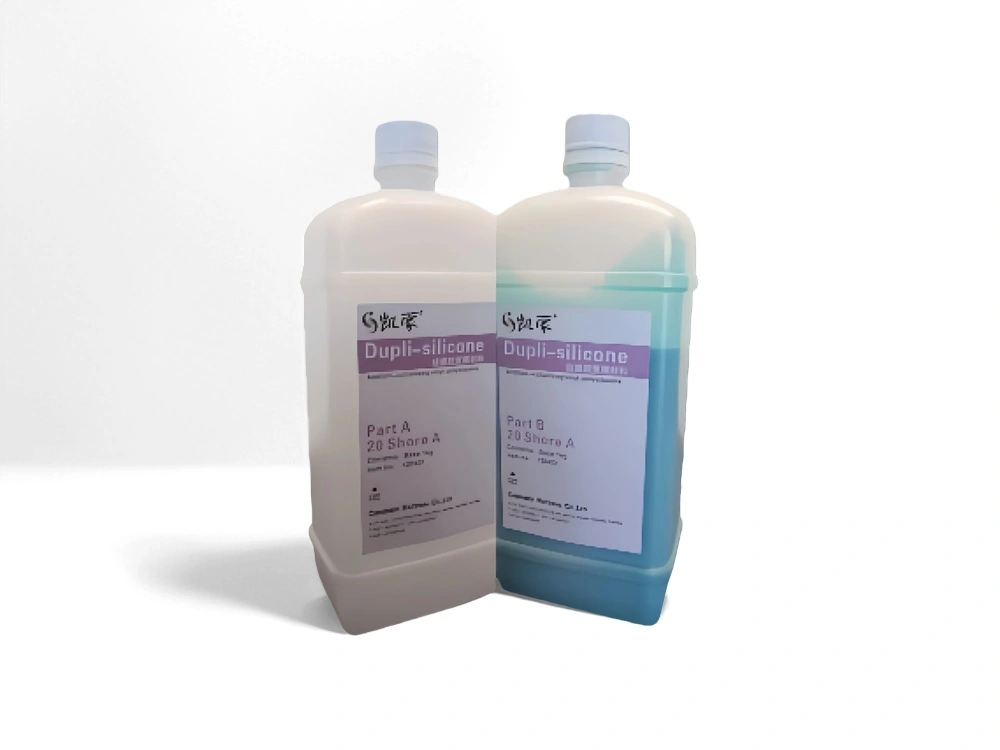
| Model duplication | Low-hardness duplication silicone | Flow, deaeration, working time, setting time, elastic recovery and resistance to repeated handling |
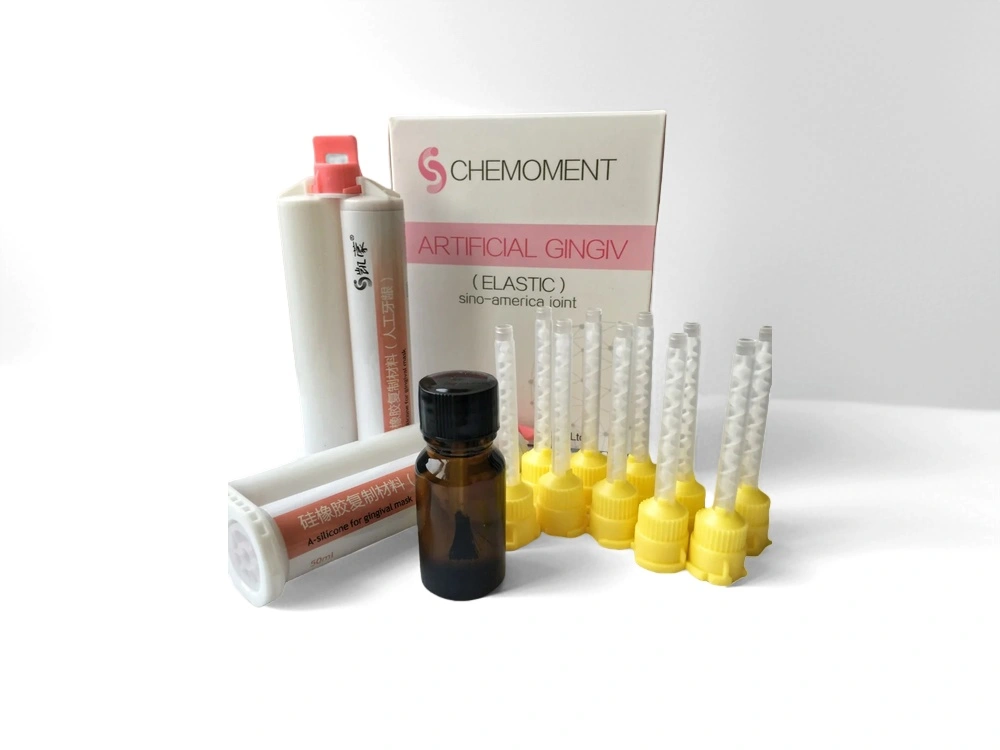
| Implant model soft tissue | Elastic or rigid gingival mask silicone | Removal path, support, hardness, polishability and separation-agent compatibility |
Current Chemoment configurations
The values below summarise the published technical data for standard products. Custom settings should be approved against the buyer's test method and acceptance range, not by comparing nominal values alone.
| Product | Working time at 23 °C | Setting or cure reference | Hardness | Standard package |
|---|---|---|---|---|
| Hydrophilic VPS putty | About 1 min 30 s; manual mixing shown separately | Setting about 4 min | Shore A 60 ± 2 | 20 g + 20 g, 25 g + 25 g or 30 g + 30 g |
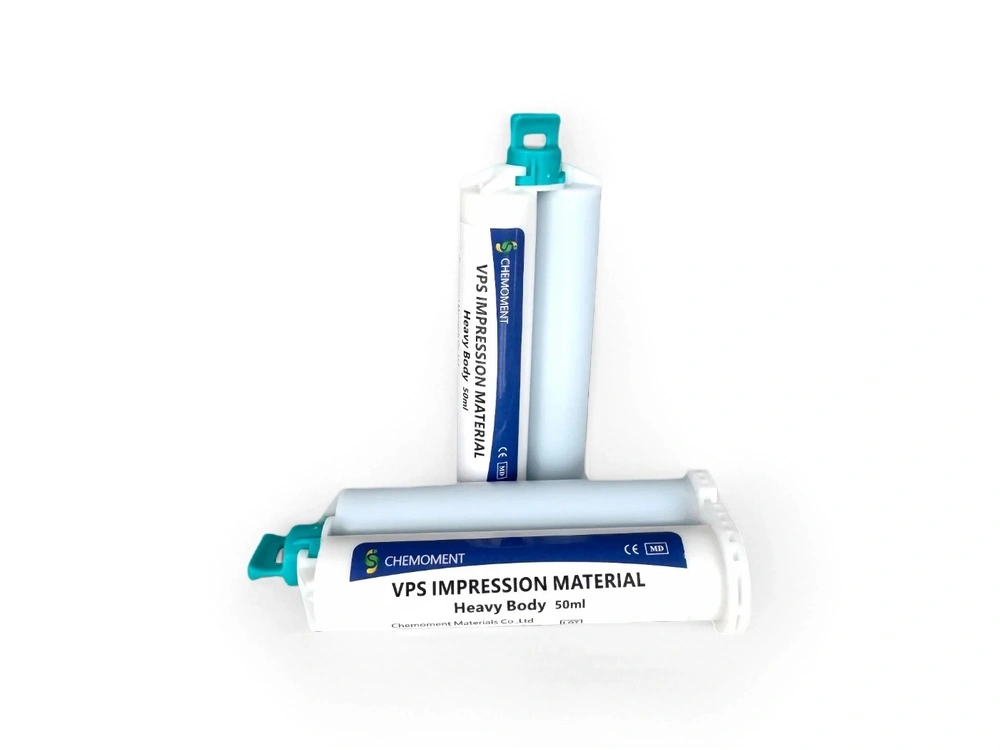
| Heavy-body VPS | About 1 min 30 s | Setting about 5 min | Shore A 60 ± 2 | 50 ml + 50 ml cartridge with mixing tips |
| Medium-body VPS | About 1 min 30 s | Setting about 5 min | Shore A 55 ± 2 | 50 ml + 50 ml cartridge with mixing tips |
| Light-body VPS | About 1 min 30 s | Setting about 5 min | Shore A 50 ± 2 | 50 ml + 50 ml cartridge with mixing tips |
| Bite-registration VPS | About 30 s | Curing about 1 min 5 s | Final hardness about 90 ± 2 | 50 ml + 50 ml cartridge with mixing tips |
| Dental laboratory addition silicone | About 1 min 30 s | Cure about 6 min | Shore A 83 ± 2 | 500 g + 500 g or 5 kg + 5 kg |
| Dental duplication silicone | About 5–6 min | Setting about 15–20 min | Shore A 25 ± 2 | 1 kg base + 1 kg catalyst |
| Gingival mask silicone | About 1 min 40 s | Setting about 7 min | Elastic 42 ± 2; rigid 70 ± 2 | 50 ml + 50 ml cartridge with tips and separating agent |
The working-time and hardness figures are product-specific and can be customized. Buyers should review the exact custom working-time and hardness qualification checklist before requesting a modified silicone.
Choose the right VPS viscosity
Putty
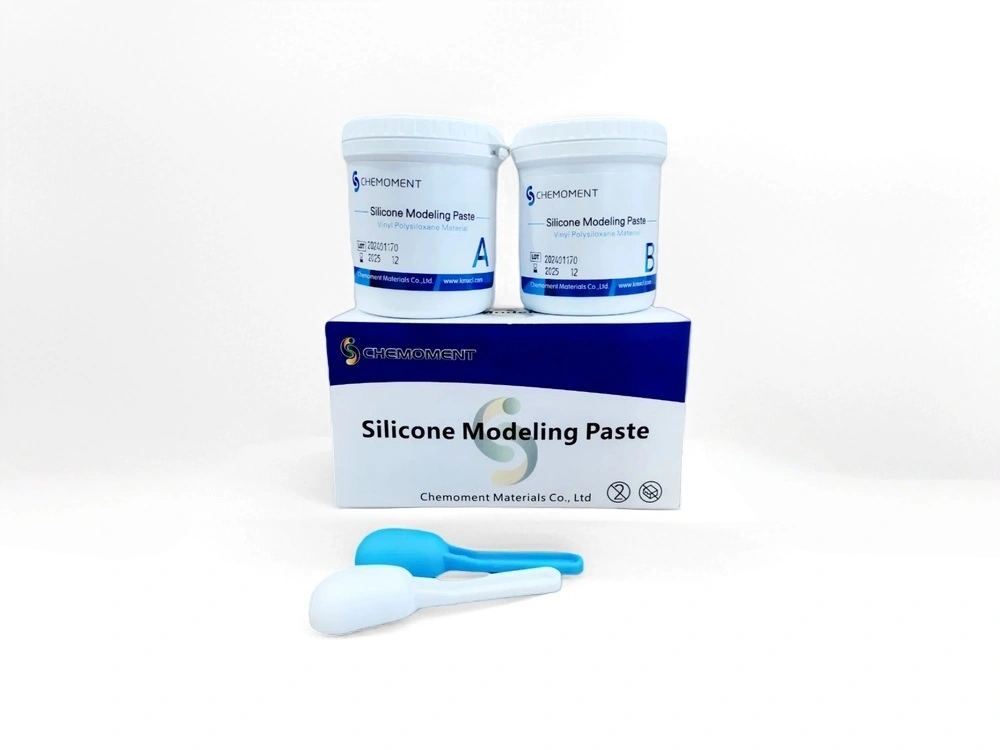
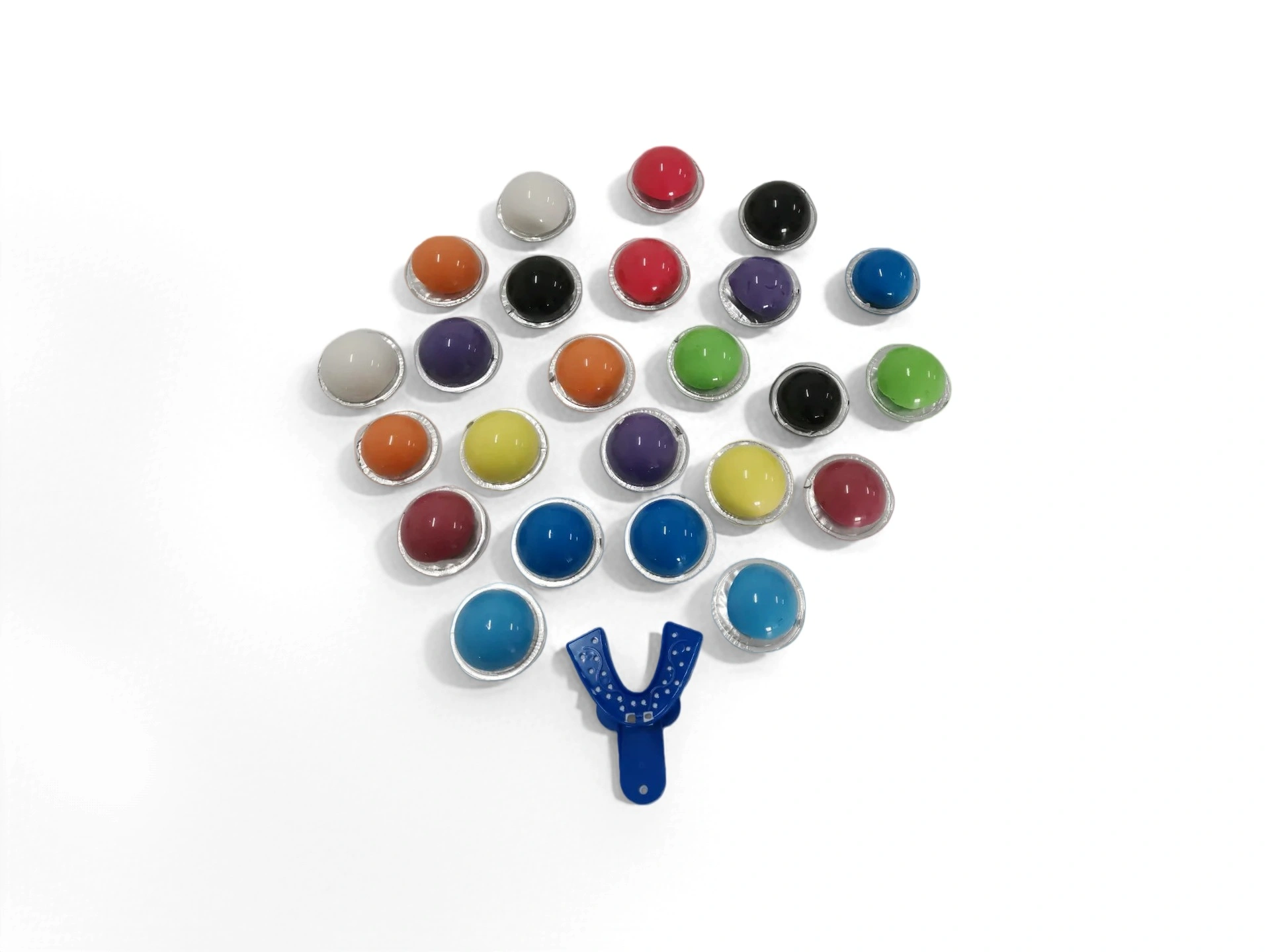
Hand-mixed putty provides bulk and tray support. It is commonly used as the heavy phase in a putty-wash impression or for preliminary and laboratory workflows where a firmer material is useful. Putty alone is not selected for fine marginal detail.
Compare the small-pack putty and plastic-jar format when pack handling and distributor shelf presentation matter.
Heavy body
Heavy-body automix material gives controlled tray support without the manual mixing step. It is useful when the workflow needs a firm tray material but the clinic prefers cartridge dispensing. Review the heavy-body specification against the selected light-body wash.
Medium body
Medium body sits between the wash and tray extremes. It can suit monophase or single-viscosity techniques when the user wants a balance of flow and support. The required seating pressure and tray design should be tested with the actual product.
Light body
Light body is the low-viscosity wash used to reproduce fine preparation detail. Pairing it with putty or heavy body is a common crown-and-bridge workflow, but the wash space, tray seating and removal path still determine the result. Review one-step and two-step putty-wash techniques before selecting the kit format.
Match the viscosity to the clinical task
Light-body VPS is intended for detail, not for providing the main support of the tray. Putty and heavy body provide support but require a more detailed wash where the preparation margin must be recorded. Medium body may reduce the number of components, but it does not automatically make every impression technique equivalent.
For a practical comparison of these three consistencies, review light, medium and heavy body VPS selection. If impressions tear or distort, use the product-specific troubleshooting guide rather than changing viscosity at random.
Bite registration is a separate product decision
Bite registration records the occlusal relationship. It should not be selected merely because it is firmer than impression putty. The material needs low resistance during closure, a short working window, fast set and enough final rigidity to support articulation.
Compare its purpose with impression putty in putty versus bite-registration material. The current Chemoment bite product uses a 30-second working time, a short in-mouth period, a curing time of about 65 seconds and a final hardness stated as 90 ± 2.
Evaluate the data that affects reorder decisions
A product list is not enough for a distributor or OEM buyer. For each SKU, compare:
- working time, setting time and the test starting point;
- viscosity and intended technique;
- Shore A hardness and the measurement conditions;
- tear resistance, elastic recovery, wetting and dimensional stability;
- cartridge, jar or bulk-pack format;
- shelf life, storage requirements and cartridge compatibility;
- batch records, technical data, safety data and regulatory documents;
- minimum order quantity, lead time and change-notification process.
The supplier evaluation checklist explains how to turn those points into a repeat-order review.
Validate samples on the actual clinical or laboratory workflow
Test the material with the intended tray, adhesive, cartridge, mixing tip, temperature and storage condition. Run at least three production batches when qualifying a long-term supply item. Record working time, handling, removal, detail reproduction, dimensional stability and any defects instead of judging only the first look of the set material.
A sample that feels acceptable does not prove batch consistency. For regulated or private-label programs, define acceptance criteria and retain the raw measurements.
Build a focused product range
A clinic range often starts with putty, light body and bite registration. Laboratories usually need a separate set of products: laboratory addition silicone, duplication silicone and a gingival mask system. Keeping these ranges distinct prevents a clinical impression material from being presented as a laboratory duplication material.
Review the complete VPS dental impression material range and the dental laboratory silicone range separately. Distributors building an OEM program can also review Chemoment dental impression materials for distributor and OEM supply.
Frequently asked questions
Which VPS viscosity is best for crown and bridge impressions?
There is no universal answer. A light-body wash with putty or heavy body is common when fine detail and tray support are both required. The correct combination depends on preparation geometry, tissue management, tray type and operator technique.
Can one product handle impressions, bite registration and laboratory duplication?
No. Those workflows require different hardness, flow, working time and removal behaviour. Keep product families separate and select the material by intended function.
Should buyers compare only Shore A hardness?
No. Hardness does not describe tear strength, elastic recovery, detail reproduction, wetting or dimensional stability. Use a combined performance profile.
What should a distributor request before adding a new SKU?
Request the technical datasheet, sample, pack specification, shelf life, mixing-tip compatibility, batch data and the documents required in the destination market. Test the product through the actual dispensing and clinical or laboratory process.
Bottom line: Select from the workflows the business actually supplies, use the published product specifications to narrow the options, and qualify each SKU with a controlled sample test before adding it to a clinic, laboratory or distributor range.