
Putty and Bite Registration Materials Are Not Used for the Same Purpose
Putty impression material and bite registration material may look similar at first because both can be firm, silicone-based, and used in dental workflows. However, they are designed for different clinical purposes.
Putty impression material is mainly used to provide body, support, and tray stability during impression taking. It is often used in putty-wash techniques, where the putty provides bulk and the wash material captures fine details.
Bite registration material is used to record the relationship between the upper and lower teeth. Its main purpose is not to capture a full impression, but to provide a stable occlusal record for restorative, prosthodontic, and laboratory workflows.
For dental clinics, using the wrong material can affect procedure efficiency and result accuracy. For distributors and OEM buyers, understanding this difference is important when building a complete dental VPS impression materials product line.

Putty vs Bite Registration Material: Quick Comparison
| Comparison Point | Putty Impression Material | Bite Registration Material |
|---|---|---|
| Main Role | Provides body, support, and tray stability during impression taking | Records the relationship between upper and lower teeth |
| Typical Use | Putty-wash technique, tray-based impression workflow, support material | Occlusal registration, bite record taking, restorative workflow |
| Clinical Purpose | Helps form the main impression body | Helps capture the bite relationship |
| Viscosity | Very high viscosity | Firm or mousse-like, depending on formulation |
| Key Requirement | Body stability, elastic recovery, compatibility with wash material | Fast setting, final rigidity, dimensional stability, trimming |
| Working Time | Should allow enough time for mixing, loading, and tray seating | Usually shorter to support quick bite capture |
| Setting Time | Should balance handling comfort and chairside efficiency | Often needs faster setting for clinical efficiency |
| Final Hardness | Should support stable impression body and removal | Should support occlusal record stability and trimming |
| Can Replace the Other? | Usually no | Usually no |
This comparison shows why the two materials should not be selected only by hardness or appearance. Their intended use is different, so their performance requirements are also different.
What Is Putty Impression Material Used For?
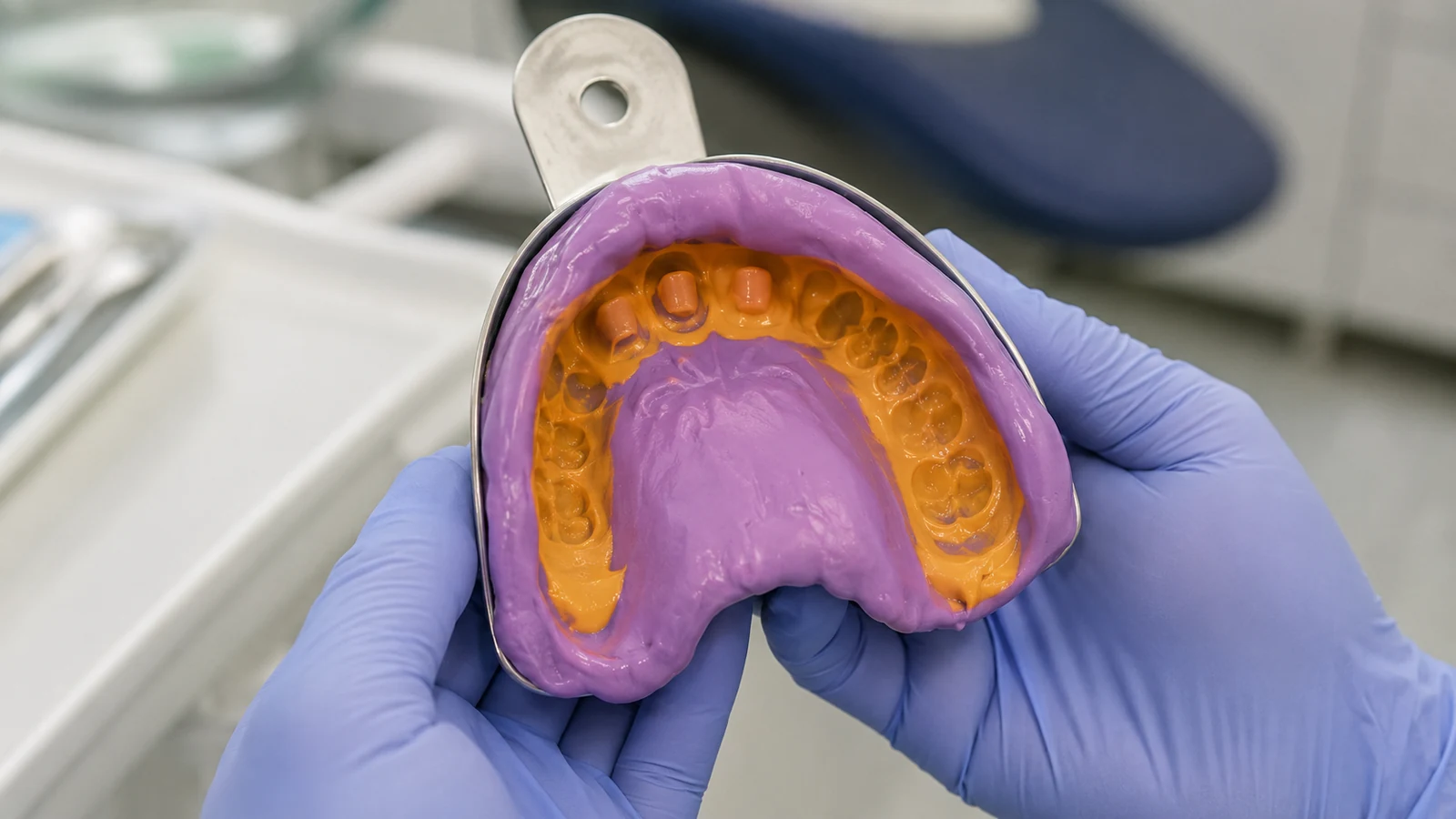
Putty impression material is a high-viscosity impression material used to provide structure and support during impression taking. In many clinical workflows, it is used together with light body or wash material.
The putty provides the main body of the impression, while the wash material flows into fine areas to capture preparation margins, tooth surfaces, and soft tissue detail. This combination is commonly known as the putty-wash technique.
Putty material is usually selected for:
- Putty-wash impression technique
- Crown and bridge impression support
- Tray-based impression procedures
- Situations requiring high body stability
- Workflows where the material must support seating pressure
- Clinics that need a stable base material for detailed wash material
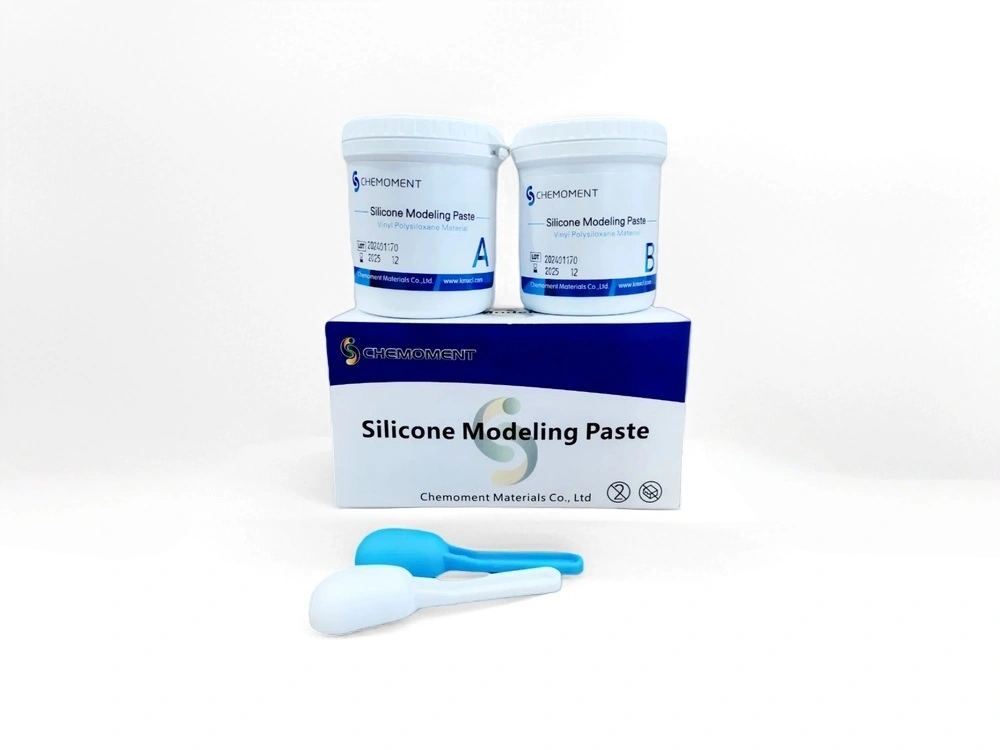
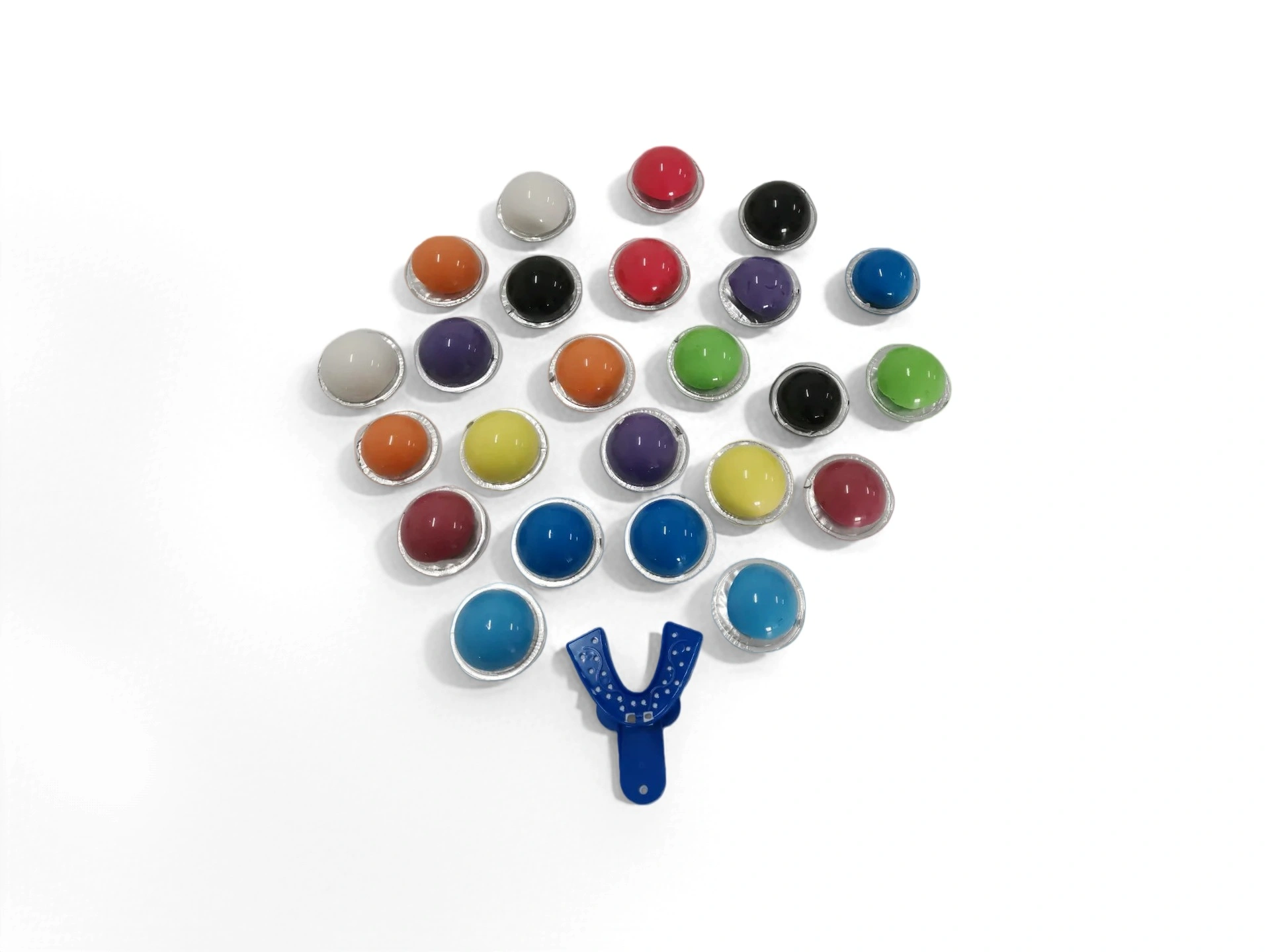
A good hydrophilic VPS putty impression material should provide stable consistency, suitable working time, elastic recovery, tear resistance, and compatibility with the wash material used in the same workflow.
Clinical Situations Where Putty Is More Suitable
Putty is more suitable when the procedure requires a stable impression body and controlled tray support.
1. Putty-Wash Technique
In the putty-wash technique, putty provides the main support, while light body or wash material captures detailed surfaces. The putty should maintain shape and support tray seating without interfering with the wash material.
2. Crown and Bridge Impressions
For crown and bridge workflows, putty can provide a stable body for the impression. It should work together with wash material to support margin detail and dimensional stability.
3. Cases Requiring Stronger Body Support
When the impression procedure needs a material with higher body and better control, putty can help maintain structure during placement and removal.
4. Workflows Requiring Manual Handling
Putty materials are often manually mixed or handled before placement. This means working time, consistency, and ease of mixing are important factors for user acceptance.
What Is Bite Registration Material Used For?
Bite registration material is used to capture the relationship between the upper and lower teeth. It helps record occlusal contact and jaw relationship for restorative, prosthodontic, and laboratory procedures.
Unlike putty impression material, bite registration material is not mainly used to form the full impression body. Its main function is to create a stable bite record that can be used during model mounting, restoration design, or occlusal adjustment.
Bite registration material is usually selected for:
- Occlusal relationship recording
- Crown and bridge bite registration
- Prosthodontic workflows
- Implant-related bite records
- Model mounting support
- Laboratory communication between clinic and lab
A good bite registration material should provide controlled flow, fast setting, stable final hardness, dimensional stability, and easy trimming.
Clinical Situations Where Bite Registration Material Is More Suitable
Bite registration material is more suitable when the clinical goal is to capture an accurate and stable bite relationship.
1. Occlusal Record Taking
The material should allow the patient to close into position and then set quickly enough to preserve the relationship between upper and lower teeth.
2. Crown and Bridge Workflows
In restorative workflows, a stable bite record helps the laboratory understand occlusal relationships and reduce adjustment problems.
3. Prosthodontic Cases
For prosthodontic work, a reliable bite record may be needed for model mounting, vertical dimension reference, or occlusal analysis.
4. Cases Requiring Trimming and Lab Handling
Bite registration material should have enough final rigidity to support trimming and handling without excessive deformation.
Why Putty and Bite Registration Materials Should Not Be Used Interchangeably
Although both materials may be firm after setting, they are not designed to perform the same role.
Putty is designed to support impression taking. It needs body stability, compatibility with wash material, elastic recovery, and enough working time for tray loading and seating.
Bite registration material is designed to record occlusal relationships. It usually needs faster setting, final rigidity, dimensional stability, and clean trimming behavior.
If buyers compare only hardness, they may choose the wrong product for the intended use. Hardness alone does not explain working time, flow, recovery, tear resistance, trimming, or clinical function.
What Happens If the Wrong Material Is Used?
Using the wrong material may create workflow and accuracy problems.
If Putty Is Used as Bite Registration Material
Putty may not provide the same bite record stability, setting speed, or trimming behavior expected from a dedicated bite registration material. This can make the occlusal record less convenient for laboratory work.
Possible issues include:
- Less suitable final rigidity for bite record handling
- Slower or less convenient setting profile
- Difficult trimming or adjustment
- Less efficient chairside workflow
- Confusion in clinical-laboratory communication
If Bite Registration Material Is Used as Putty
Bite registration material may not provide the tray support, impression body, or wash compatibility required for putty-wash impression procedures.
Possible issues include:
- Insufficient body for impression support
- Poor suitability for full impression workflows
- Limited compatibility with wash material techniques
- Unstable tray-based impression result
- Higher risk of using the material outside its intended purpose
For distributors and OEM buyers, incorrect positioning can also cause customer complaints and repeat-order problems.
Key Factors When Comparing Putty Impression Material
When selecting putty material, buyers should compare more than firmness. The material must fit the impression workflow.
| Factor | Why It Matters for Putty |
|---|---|
| Consistency | Affects mixing, handling, and tray loading |
| Working Time | Allows enough time for mixing, loading, and seating |
| Setting Time | Affects chairside efficiency and removal timing |
| Elastic Recovery | Helps the impression recover after removal |
| Tear Resistance | Important around detailed or thin areas |
| Compatibility with Wash Material | Important for putty-wash technique |
| Dimensional Stability | Helps maintain impression accuracy after setting |
| Packaging Format | Affects clinic use, distributor sales, and storage |
| Batch Consistency | Important for repeat orders and long-term supply |
Working time and setting time should be reviewed carefully because they directly affect tray loading, seating, bite capture, and removal timing. Buyers can also compare this topic in more detail in working time and setting time in VPS impression materials.
For clinics, putty should feel controlled and predictable during use. For distributors, the material should be easy to explain, sample, and reorder.

Key Factors When Comparing Bite Registration Material
Bite registration material should be evaluated by its ability to capture and maintain a stable occlusal record.
| Factor | Why It Matters for Bite Registration |
|---|---|
| Working Time | Should allow placement before setting begins |
| Setting Time | Usually needs to be short enough for efficient bite capture |
| Final Hardness | Supports stable bite record and lab handling |
| Dimensional Stability | Helps preserve the recorded relationship |
| Trimming Behavior | Important for laboratory adjustment and clean margins |
| Flow Control | Allows placement without excessive spreading |
| Resistance to Deformation | Helps maintain record accuracy during handling |
| Packaging Format | Affects daily clinical use and distribution |
| Batch Consistency | Important for repeat use and customer acceptance |
A good bite registration material should not only set quickly. It should also remain stable enough for handling, trimming, and laboratory interpretation.
What Distributors Should Consider When Building a Product Line
Dental distributors often need both putty impression material and bite registration material because the two products serve different clinical needs.
A practical dental impression material product line may include:
| Product Type | Role in Product Line |
|---|---|
| Putty Impression Material | Supports putty-wash and tray-based impression workflows |
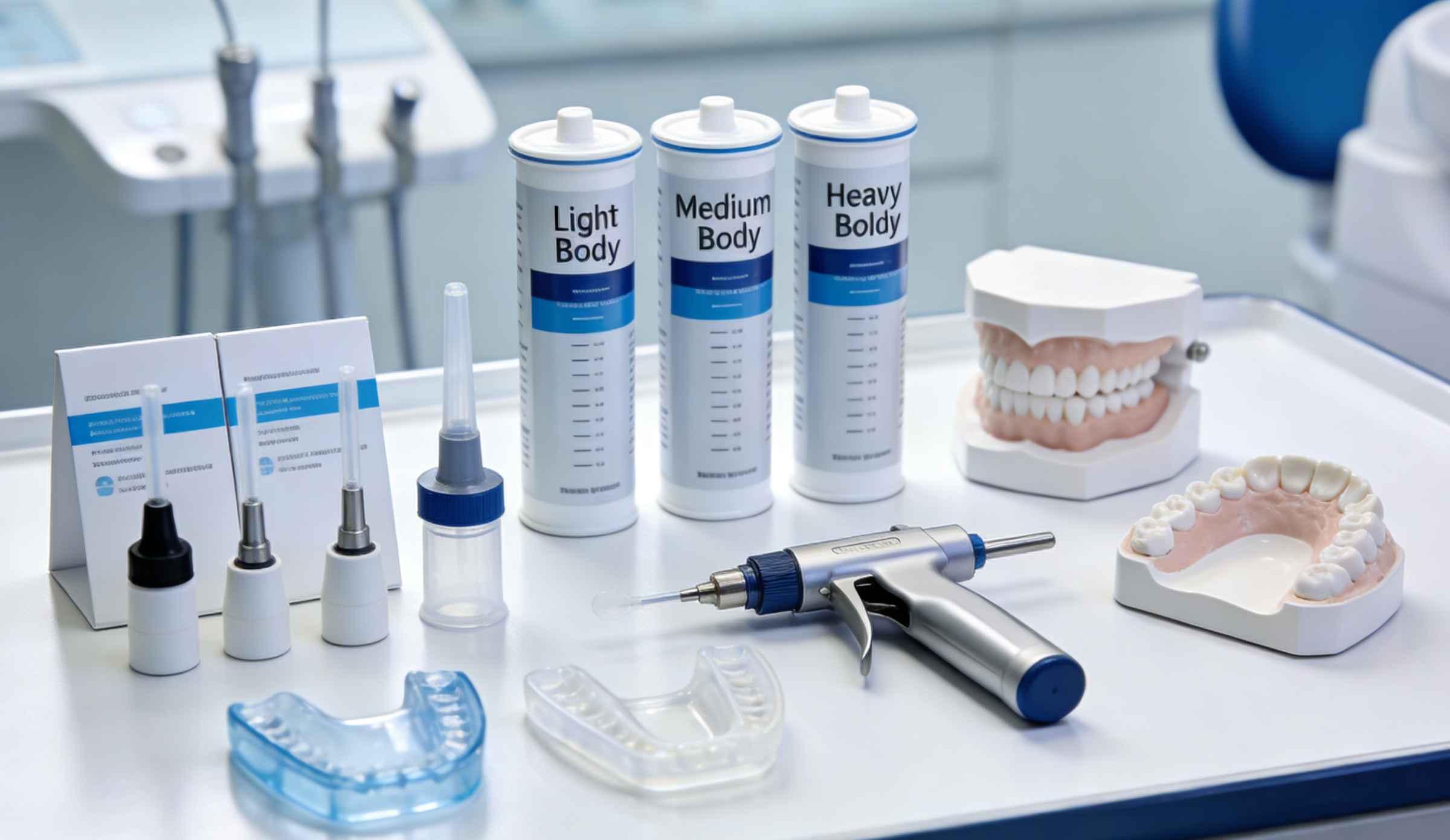
| Light Body VPS | Captures fine detail around margins and prepared areas |
| Medium Body VPS | Offers balanced handling for general impression use |
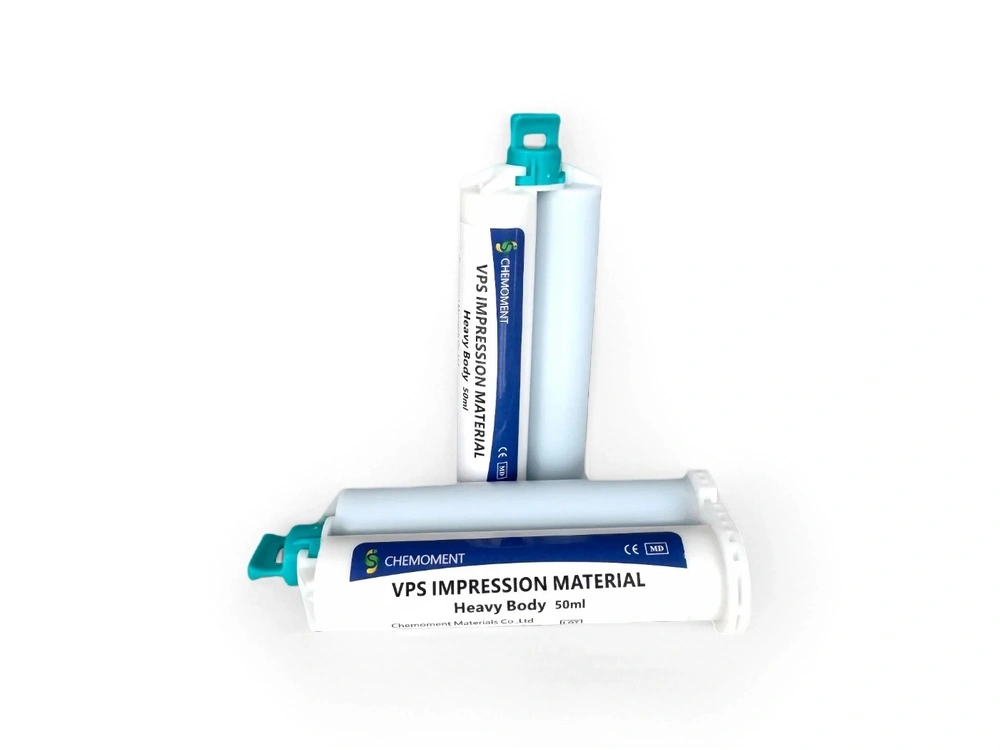
| Heavy Body VPS | Provides stronger tray support and stable body |
| Bite Registration Material | Captures occlusal relationships |
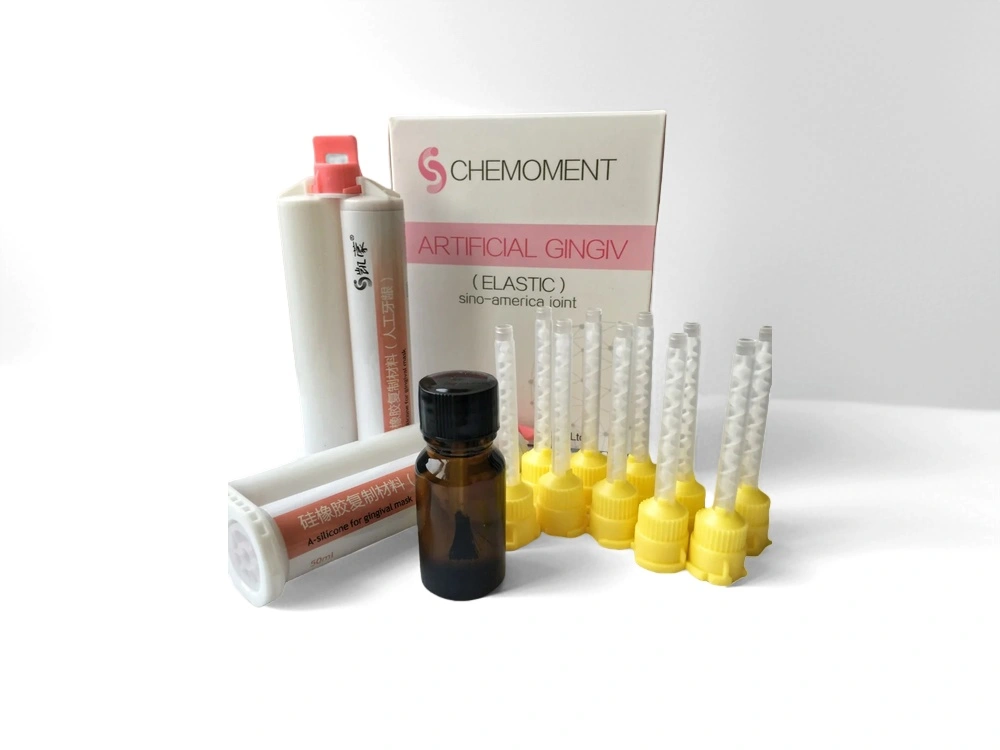
| Gingival Mask Silicone | Supports laboratory soft tissue simulation |
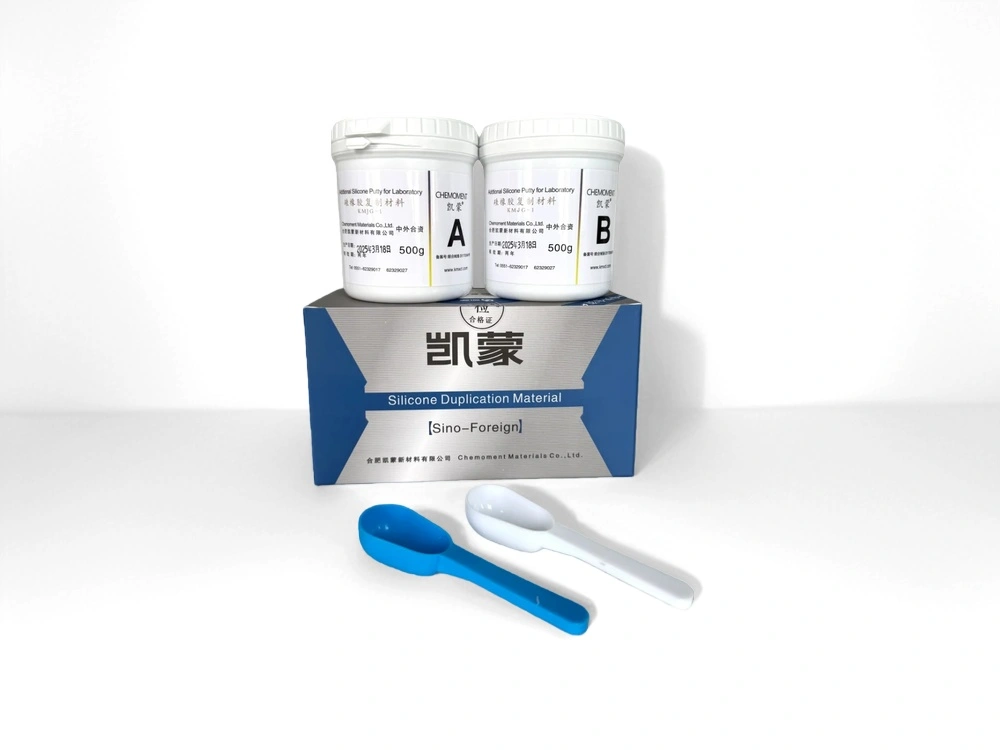
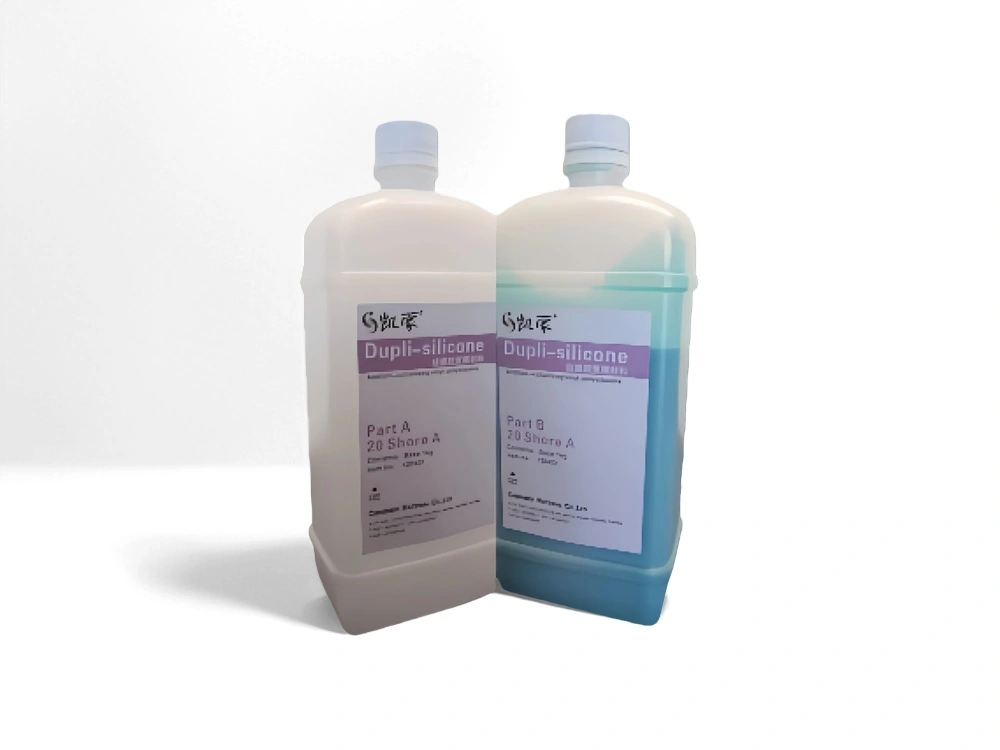
| Duplication Silicone | Supports model duplication and lab replication |
For distributors, this structure makes the product line easier to explain to clinics and laboratories. It also reduces the risk of customers using one material for the wrong purpose.
For laboratory-related product planning, buyers may also compare gingival mask silicone and duplication silicone when building a wider dental silicone material range.
How Buyers Should Compare Samples
Before ordering in bulk, buyers should test putty and bite registration materials according to their actual use, not only by appearance or touch.
For putty, buyers should check:
- Mixing feel
- Tray loading behavior
- Working time
- Setting time
- Compatibility with wash material
- Elastic recovery after removal
- Dimensional stability
- Packaging convenience
For bite registration material, buyers should check:
- Placement control
- Setting speed
- Final hardness
- Trimming behavior
- Stability after removal
- Handling during lab work
- Packaging format
- Batch consistency
A sample should be judged by whether it fits the intended workflow. A material that feels firm is not necessarily suitable for both impression taking and bite registration.
Final Point
Putty impression material and bite registration material are both important in dental workflows, but they are not interchangeable.
Putty is selected for impression support, tray stability, and putty-wash techniques. Bite registration material is selected for occlusal record taking, final rigidity, trimming, and clinical-laboratory communication.
For dental clinics, the correct material helps improve workflow stability. For distributors and OEM buyers, clear product positioning helps reduce customer confusion and support repeat orders.
The better approach is to compare each material by its intended clinical function, not by appearance, hardness, or general silicone category.
FAQ
1. What is the main difference between putty and bite registration material?
Putty impression material is used to provide body and support during impression taking. Bite registration material is used to record the relationship between upper and lower teeth.
2. Can putty be used as bite registration material?
Usually no. Putty is designed for impression support, not for occlusal record taking. It may not provide the same setting speed, final rigidity, or trimming behavior as a dedicated bite registration material.
3. Can bite registration material be used as putty?
Usually no. Bite registration material is designed for bite record capture, not for tray support or full impression body. It may not be suitable for putty-wash impression techniques.
4. Is bite registration material harder than putty?
Bite registration material is often designed to reach a stable final hardness for occlusal record handling and trimming. However, hardness alone should not be used to compare the two materials because their clinical purposes are different.
5. What properties matter most for putty impression material?
Important properties include consistency, working time, setting time, elastic recovery, tear resistance, dimensional stability, and compatibility with wash material.
6. What properties matter most for bite registration silicone?
Important properties include setting time, final hardness, dimensional stability, trimming behavior, resistance to deformation, and placement control.