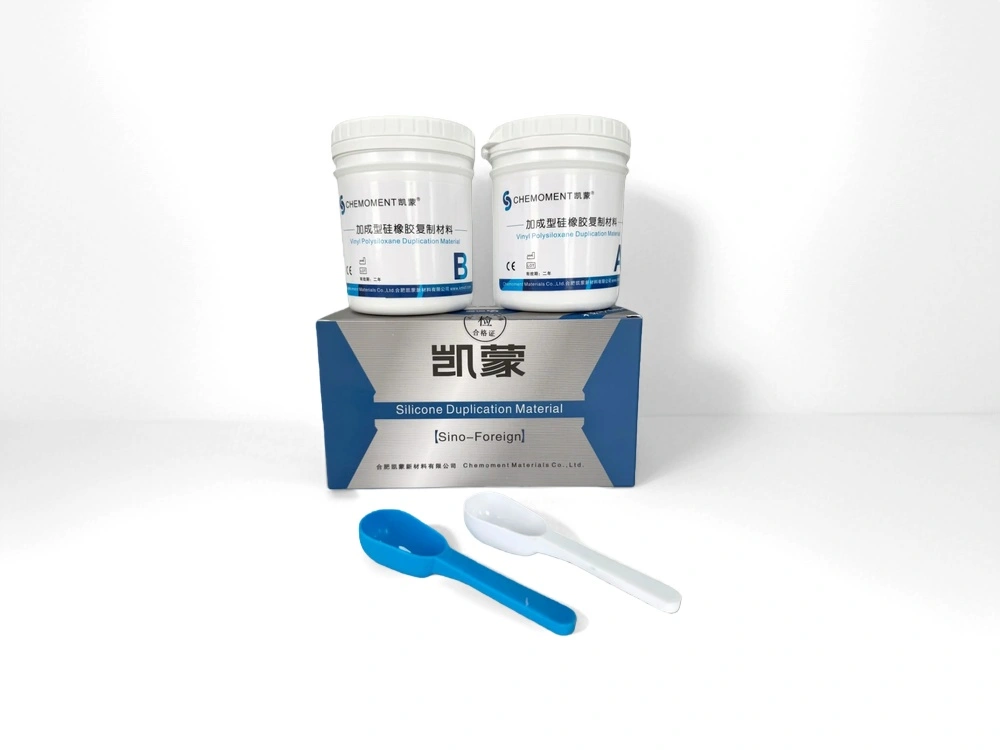

Quick answer: Chemoment supplies addition-cured dental silicones for clinics, dental laboratories and distributor or private-label programs. The range includes VPS impression materials, bite registration, dental laboratory putty, duplication silicone, gingival mask silicone, ear impression silicone, metrology replication silicone and forensic casting silicone.
This page is a product-program overview for buyers building a repeatable product range. Each product should be selected from its own technical page, sample-tested in the intended workflow and supported by the required commercial and regulatory documents.
Dental clinic range
| Product | Main use | Buyer focus |
|---|---|---|
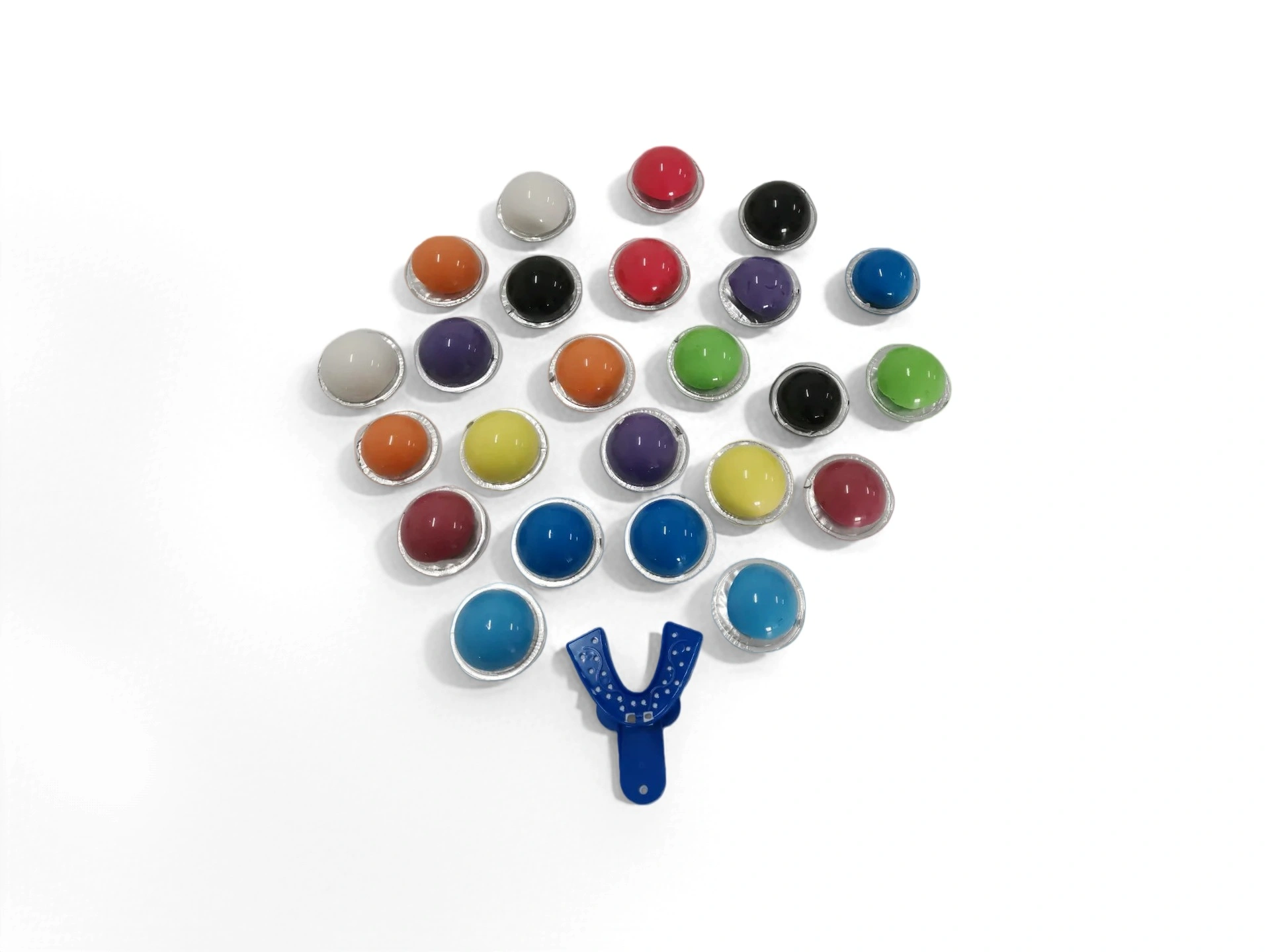
| Hydrophilic VPS putty | Putty-wash and preliminary impression workflows | Pack format, mixing time, working time, Shore A hardness and shelf life |
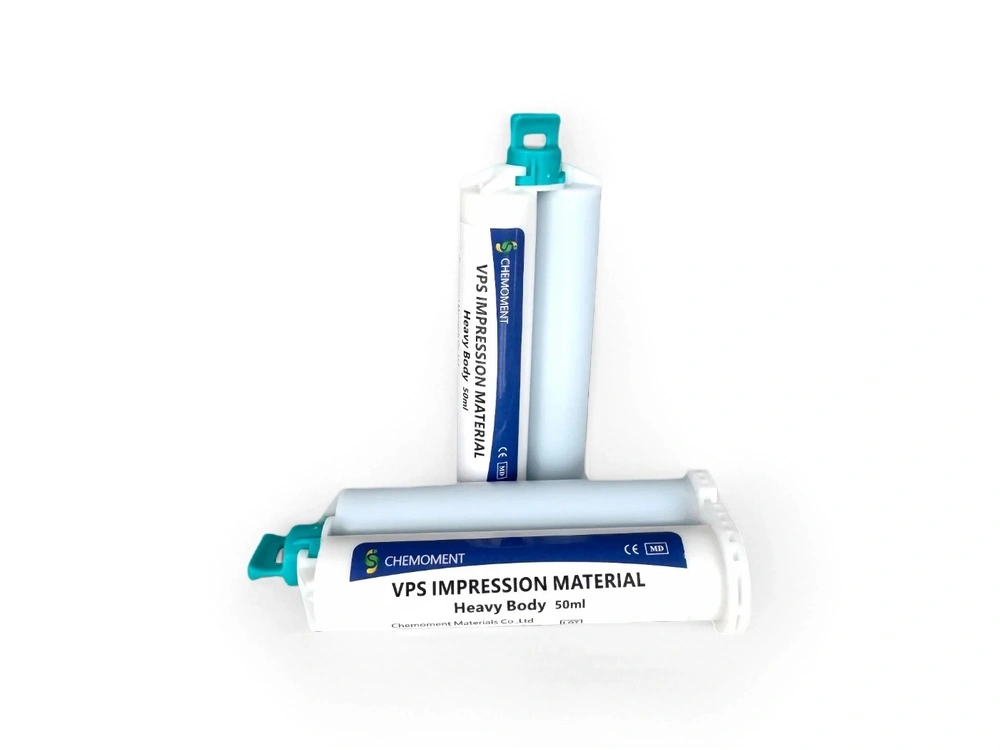
| Heavy-body VPS | Firmer automix tray material | Support, flow, seating resistance and light-body compatibility |
| Medium-body VPS | Medium-viscosity or monophase technique | Flow under pressure, handling window and detail reproduction |
| Light-body VPS | Wash material for fine preparation detail | Wetting, flow, tear resistance and cartridge compatibility |
| Bite-registration VPS | Occlusal relationship records | Closure resistance, short working time, final hardness and stability |
Dental laboratory range
| Product | Main use | Buyer focus |
|---|---|---|
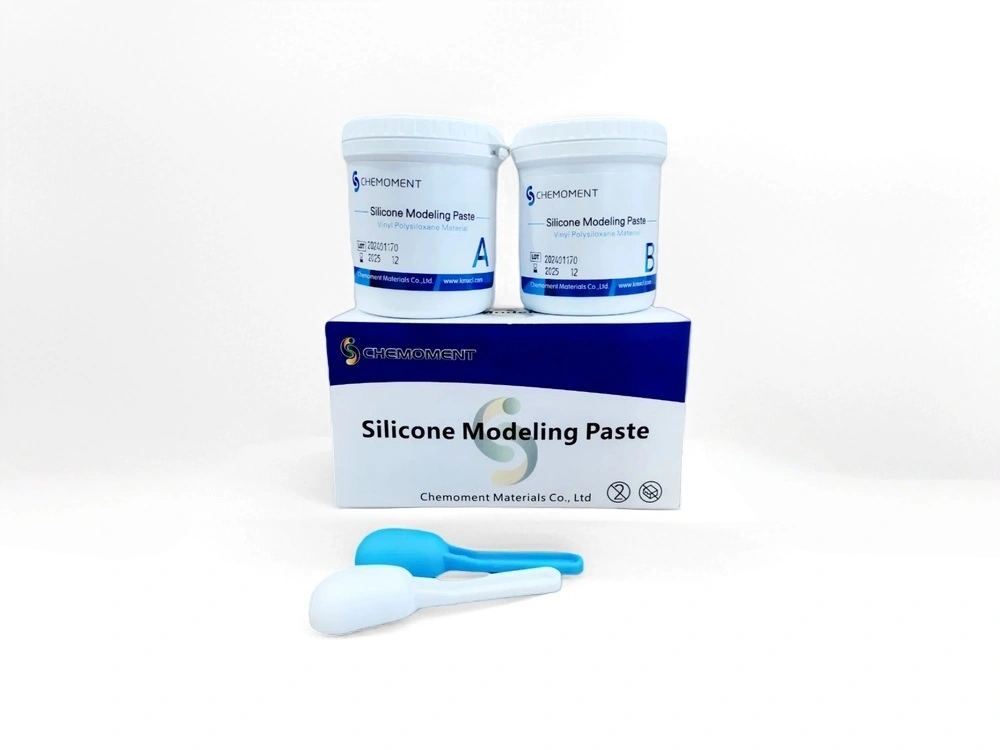
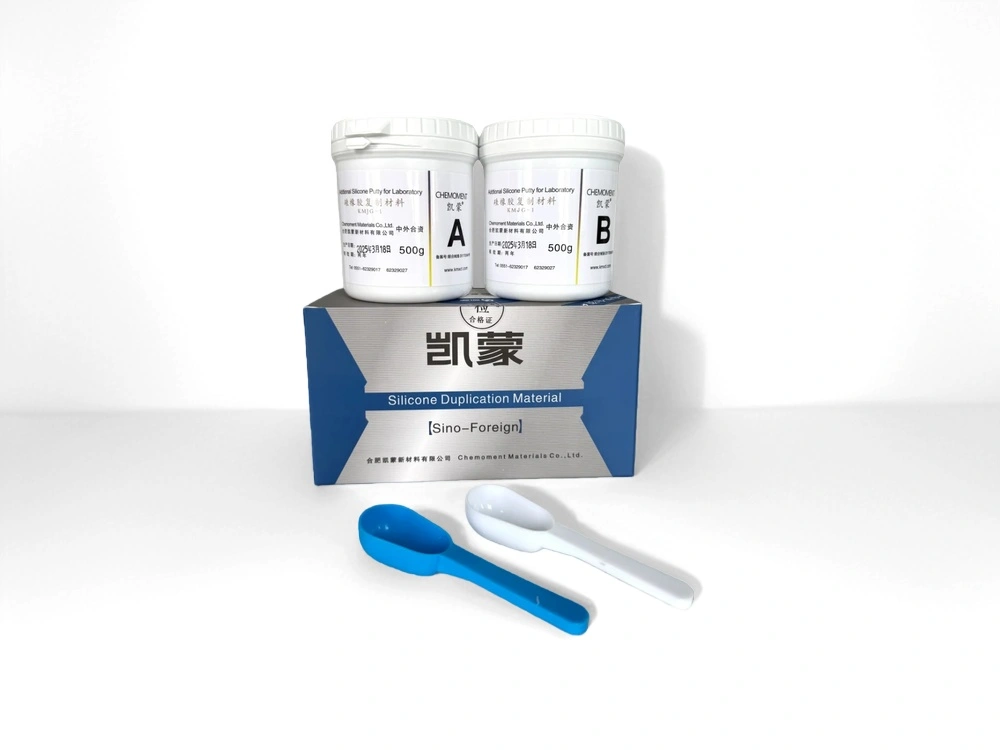
| Laboratory addition silicone | Laboratory impression and model work | High Shore A hardness, pack size, working time and model compatibility |
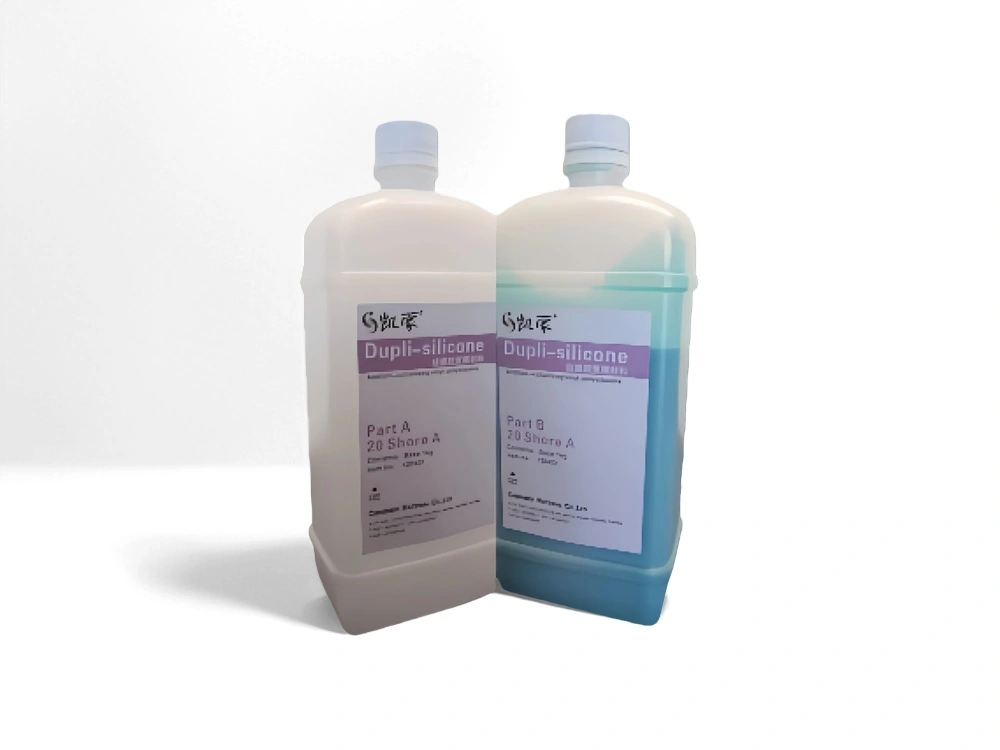
| Duplication silicone | Model reproduction and reusable molds | Low hardness, flow, setting time, elastic recovery and deaeration |
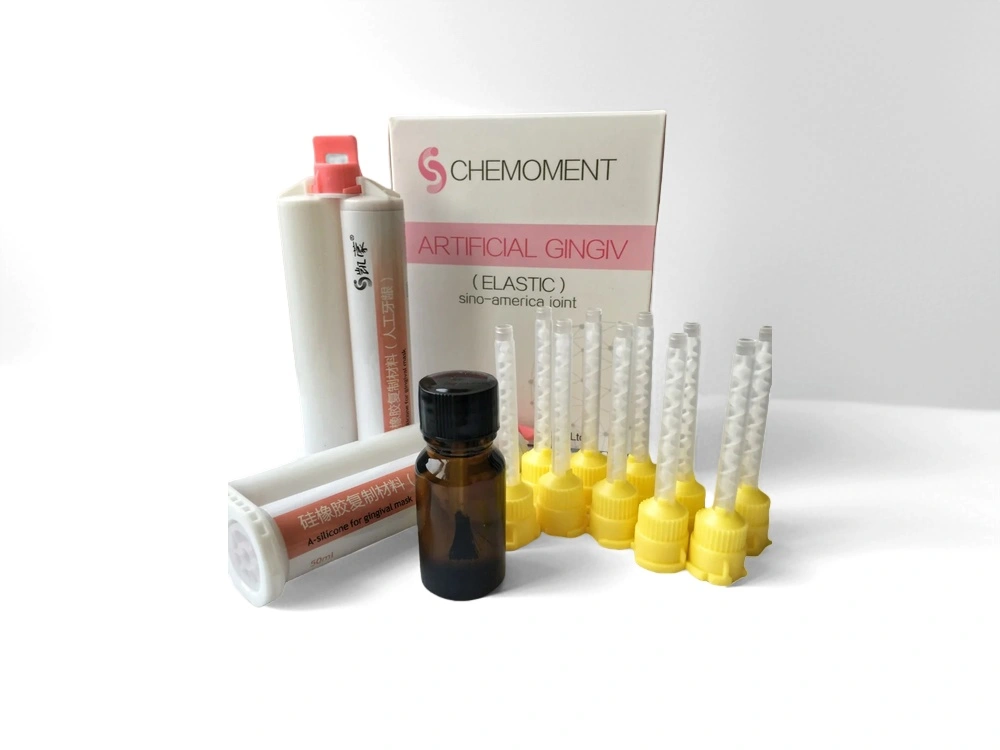
| Gingival mask silicone | Soft-tissue contour on implant and working models | Elastic or rigid version, removal path, polishability and separating agent |
Specialty silicone range
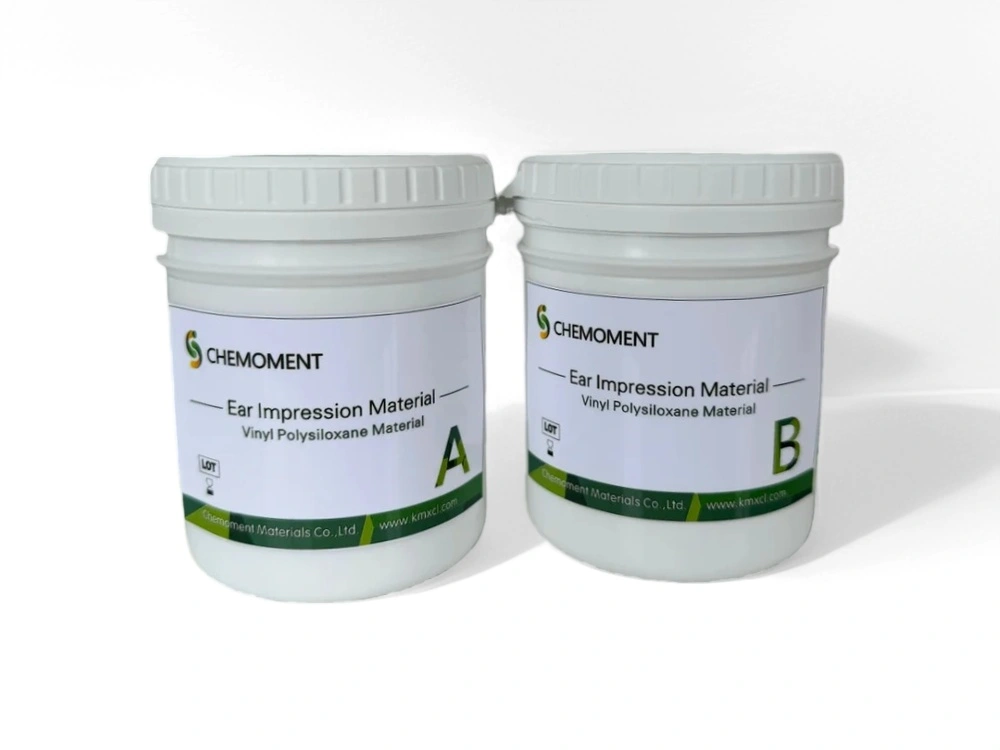
The wider product portfolio includes ear impression silicone, metrology replication material and forensic silicone casting material. These are separate applications with different hardness, flow, working time, color and documentation requirements. They should not be marketed as interchangeable grades of dental impression material.
What can be customized
Depending on the product and intended market, the discussion can include working time, setting time, hardness, color, packaging and private-label presentation. A customization request should include the current product reference, target values and tolerances, the test method, the intended workflow and the annual or launch quantity.
For a disciplined qualification process, use the custom working-time and hardness buyer checklist. A change in one nominal value can affect flow, elastic recovery, tear strength, dimensional stability or cure behaviour, so the complete product should be reviewed.
Documents to request with a quotation
- technical datasheet for the exact product and pack format;
- batch certificate or measured results where applicable;
- safety data sheet and storage information;
- shelf-life and transport guidance;
- cartridge, mixing-tip and dispenser compatibility;
- regulatory documents required in the destination market;
- minimum order quantity, lead time and change-notification terms.
Build a product range without duplication
Start with the workflows your customers actually use. A basic clinic range may consist of putty, light body and bite registration. A laboratory range should include its own model, duplication and gingival-mask materials. Adding several products with the same role can create catalogue complexity without improving clinical coverage.
Review the consolidated dental impression and laboratory silicone selection guide before deciding which SKUs belong in the first order.
Private-label and distributor support
For a private-label project, provide the target product type, market, packaging format, artwork requirements, language, launch quantity and forecast. Ask the supplier to confirm which elements are product-specific and which require separate regulatory review. Keep approved samples and written specifications as the reference for repeat orders.
Frequently asked questions
Can one supplier cover both clinic and dental laboratory silicones?
Yes, but the products must remain separate. Clinical impression materials, bite registration, laboratory putty, duplication silicone and gingival mask silicone have different hardness, flow and handling requirements.
Can Chemoment provide private-label packaging?
Packaging and private-label requirements can be discussed for the selected product. Confirm the cartridge or pack format, artwork, language, minimum quantity and destination-market documents before approval.
How should a distributor choose its first VPS range?
Map the range to end-user workflows. Putty, light body and bite registration are a common clinical starting point; heavy or medium body may be added when the customer base uses those techniques.
Where can buyers request samples and technical documents?
Use the contact page and specify the product, application, target market, packaging requirement and requested documents.
Bottom line: A useful supplier range is organized around real clinical and laboratory workflows, with a clear product reference and tested specification for every SKU.