
A small void in a crown impression often creates a practical chairside question: add fresh light body VPS and reseat the impression, or take a new one? The answer depends less on the size of the defect and more on where it is, whether the tray can reseat exactly, and whether the lab will receive one clear reading of the margin.
In crown and bridge work, relining should be treated as an exception. Light body VPS can record fine detail around a preparation, but it cannot correct an impression that was already distorted, contaminated, under-seated, or poorly supported. A repaired impression may look acceptable at first glance and still create a crown that needs adjustment or remake.
What Relining a Crown Impression Really Means
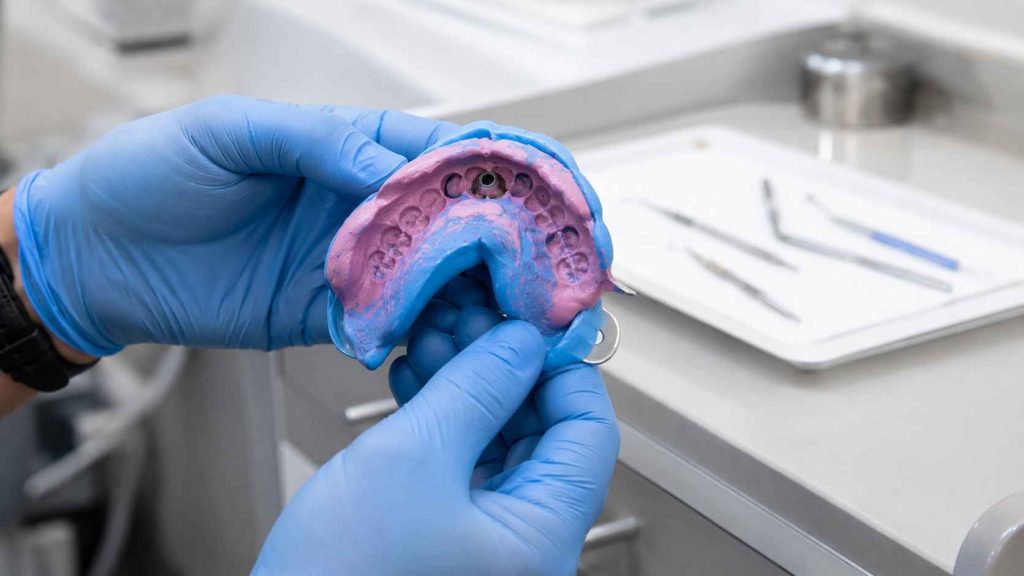
Relining means placing new light body VPS into an already set impression and reseating it in the mouth to capture missing detail. It is usually considered after finding a bubble, a pull, a void, or an underfilled area after tray removal.
The concern is simple: the original impression has already locked in a seating position. When fresh wash material is added, the tray must return along the same path without stopping short, rocking, or creating pressure in a narrow area. If that does not happen, the reline may create a new surface that does not match the original record.
For a crown, that mismatch matters. The lab is not only reading a tooth surface. It is reading the finish line, soft tissue contour, adjacent contacts, occlusal clearance, and the relationship between the preparation and the tray material.
Can You Reline a Crown Impression with Light Body VPS?
Yes, but only in limited cases. A small defect away from the finish line may sometimes be repaired if the impression is otherwise stable, fully seated, and free from tearing. A minor bubble on a non-critical unprepared surface is very different from a void on a subgingival margin.
When the defect involves the finish line, deep chamfer, shoulder, interproximal area, bridge abutment, or any area the technician must use to define the restoration, a full retake is usually the better choice. The lab should not have to guess which line is the real margin.
Reline or Retake: A Practical Decision Table
| Clinical Situation | Reline with Light Body VPS? | Recommended Decision |
|---|---|---|
| Small bubble away from the margin | Sometimes | Check reseating and lab visibility |
| Void directly on the finish line | No | Retake the impression |
| Torn wash around a subgingival margin | No | Improve field control and retake |
| Tray was not fully seated the first time | No | Retake with corrected tray loading and seating path |
| Blood or saliva affected the margin | No | Control moisture and retake |
| Unclear adjacent contact or proximal detail | Usually no | Retake, especially for crowns and bridges |
| Minor non-critical void on an unprepared surface | Possibly | Repair only if reseating is predictable |
Why Relining Can Create a Worse Impression
Incomplete reseating
Fresh light body VPS adds material inside a space that was already recorded. If the material has no escape path, the tray may stop slightly short. That small difference can affect crown seating, contact tightness, and occlusion.
Hydraulic pressure
New wash material can create pressure during reseating, especially around deep margins, second molars, interproximal boxes, and tight sulcular areas. Instead of improving the record, the pressure may distort soft tissue or prevent full seating.
Double margins
If the original margin and the relined area do not align perfectly, the technician may see two possible finish lines. A repaired impression with competing margin lines is often less useful than a clean retake.
Contaminated surface
Set VPS may be exposed to saliva, blood, glove powder, tray adhesive residue, or handling. The new layer may still set, but the interface is not always reliable. Thin relined areas can also tear during removal.
The visible void may not be the real problem
A bubble can be a symptom of poor drying, collapsed tissue, delayed tray seating, low wash volume, unsuitable viscosity pairing, or tray movement. Relining fills the missing spot. It does not correct the reason the detail was missed.
Why Light Body VPS Is Used Around Crown Margins
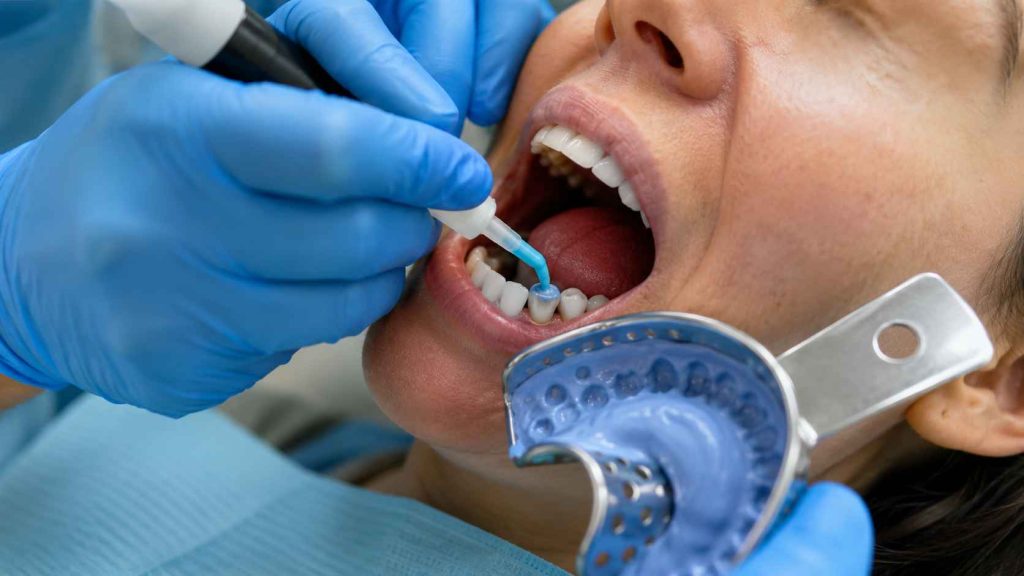
Light body VPS is selected for areas where fine detail matters. It flows around the prepared tooth, enters narrow sulcular areas, and helps record the finish line when the margin is visible and the field is controlled.
But material flow has limits. If blood, saliva, or collapsed gingiva covers the margin, no light body material can record the detail accurately. Before blaming the impression material, it is worth checking retraction, drying, tray choice, seating speed, assistant timing, and working time.
A consistent VPS impression material helps reduce variation, but clinical control still determines whether the material reaches the area that matters.
Light Body VPS Needs Stable Tray Support
Light body VPS should not carry the impression alone. It needs support from a material with enough body and elastic recovery to hold the tray record stable. In many crown and bridge cases, the wash material records the margin while medium body or heavy body VPS supports the bulk of the impression.
If the tray material is too soft, underfilled, poorly mixed, or removed too early, the wash layer can distort even when the light body performs well. This is why clinics should evaluate wash and tray materials as a system, not as separate products.
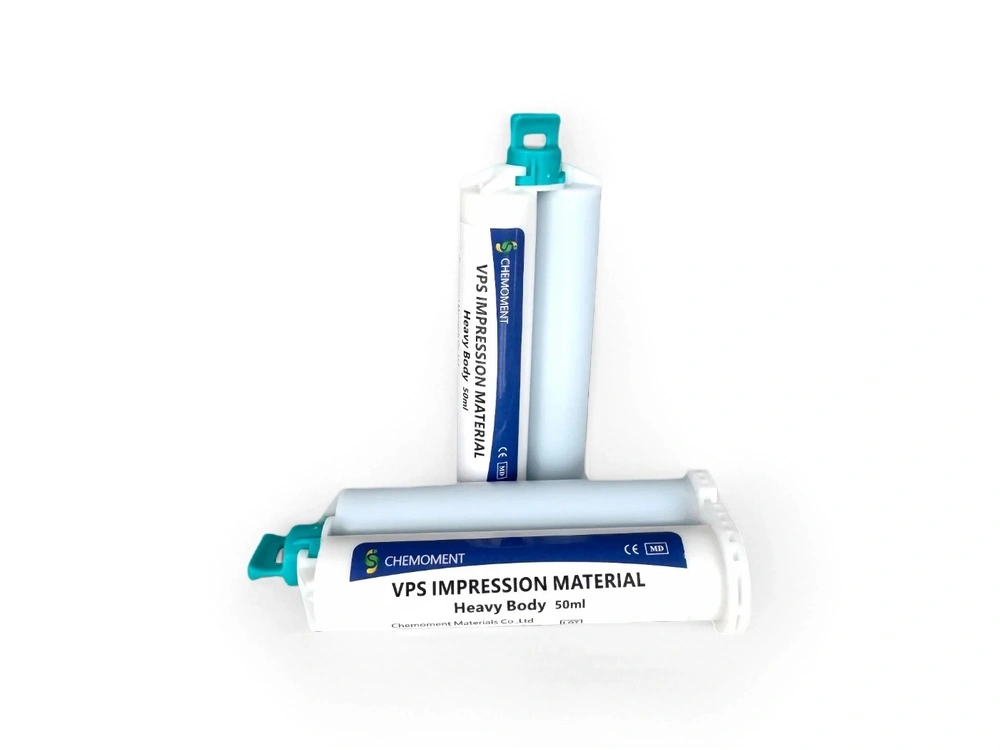
Chemoment’s Heavy Body VPS Impression Material is designed for tray support, elastic recovery, tear resistance, hydrophilicity, and dimensional stability in dental cartridge dispensing workflows. For crown cases, it should be paired with a light body material that provides fine flow without becoming weak around thin margins.
When Retaking the Impression Saves Time
A retake may feel inconvenient during the appointment, but it is often faster than managing a crown that returns with an open margin, tight contact, high bite, or poor seating. Once a restoration reaches the adjustment or remake stage, the time cost is no longer just chairside. It also involves lab communication, patient confidence, and schedule disruption.
Retaking is usually the better decision for subgingival margins, multi-unit bridges, implant-supported restorations, second molar crowns, and cases where access or visibility was already limited. These cases need a clean, readable impression, not a repaired area that requires interpretation.
What Buyers Should Check in Light Body VPS
When comparing light body VPS materials, flow should not be the only deciding factor. A material that flows well still needs enough tear resistance around thin margins. A fast-set material can improve efficiency, but it must still allow enough time for syringing, tray loading, and seating.
- Flow around fine margins and interproximal areas
- Hydrophilicity under realistic moisture conditions
- Tear resistance in thin wash sections
- Elastic recovery after removal from undercuts
- Dimensional stability during model pouring and lab handling
- Working time and intraoral setting time
- Cartridge dispensing consistency
- Mixing tip compatibility
- Batch-to-batch stability
For buyers who are comparing materials beyond catalog claims, Chemoment’s article on why VPS impression materials tear or distort explains several common failure points that should be checked during sample testing.
How Distributors Should Test a VPS System Before Supplying Clinics
Distributors should not evaluate VPS materials only by viscosity name or price. A clinic may be used to a specific working time, stiffness, removal feel, and margin behavior. If a replacement material behaves differently, dentists notice it quickly.
Before supplying a new VPS system, test it in real application scenarios: single crowns, bridge impressions, denture impressions, thin wash areas, and cases with moderate undercuts. Also check cartridge quality, mixing tip fit, shelf life, packaging stability, technical documents, and sample support.
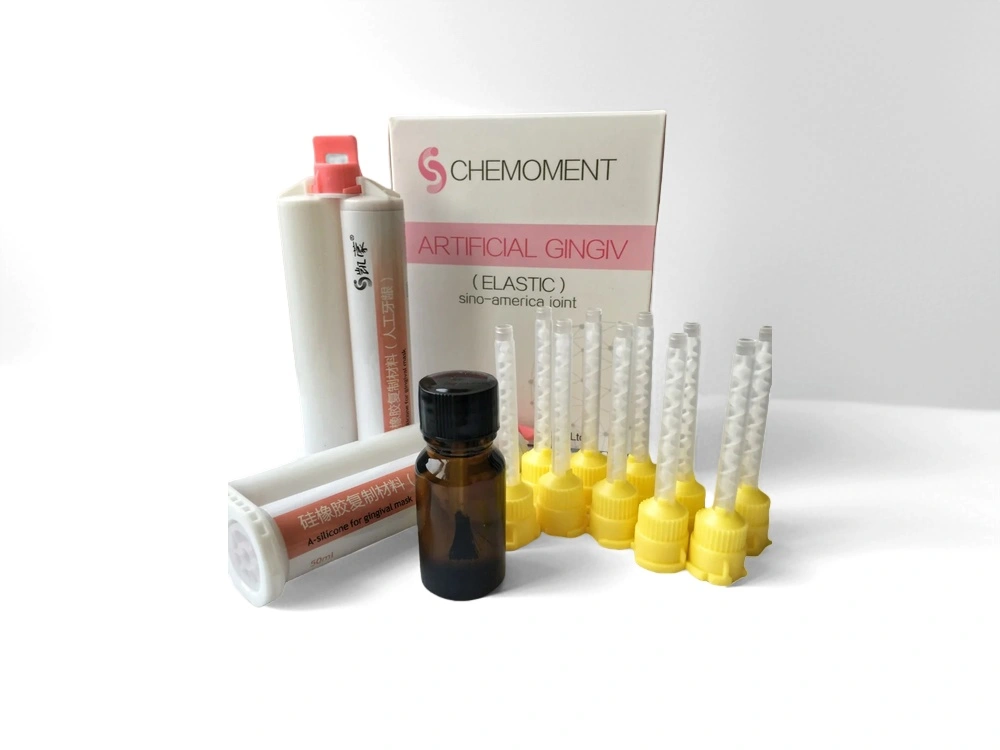
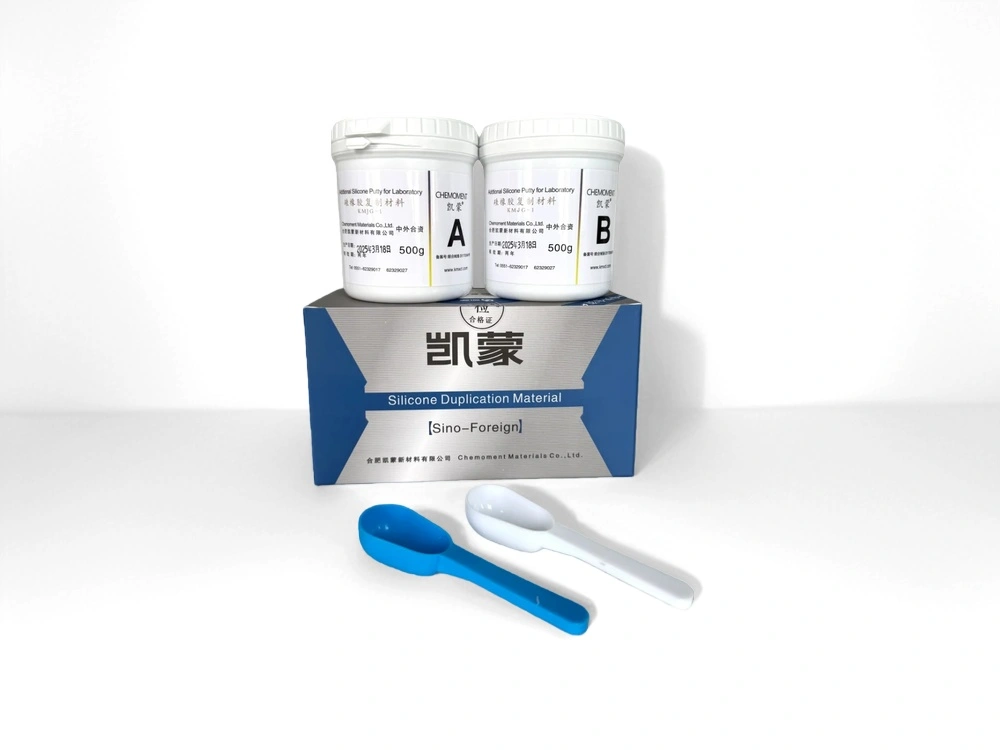
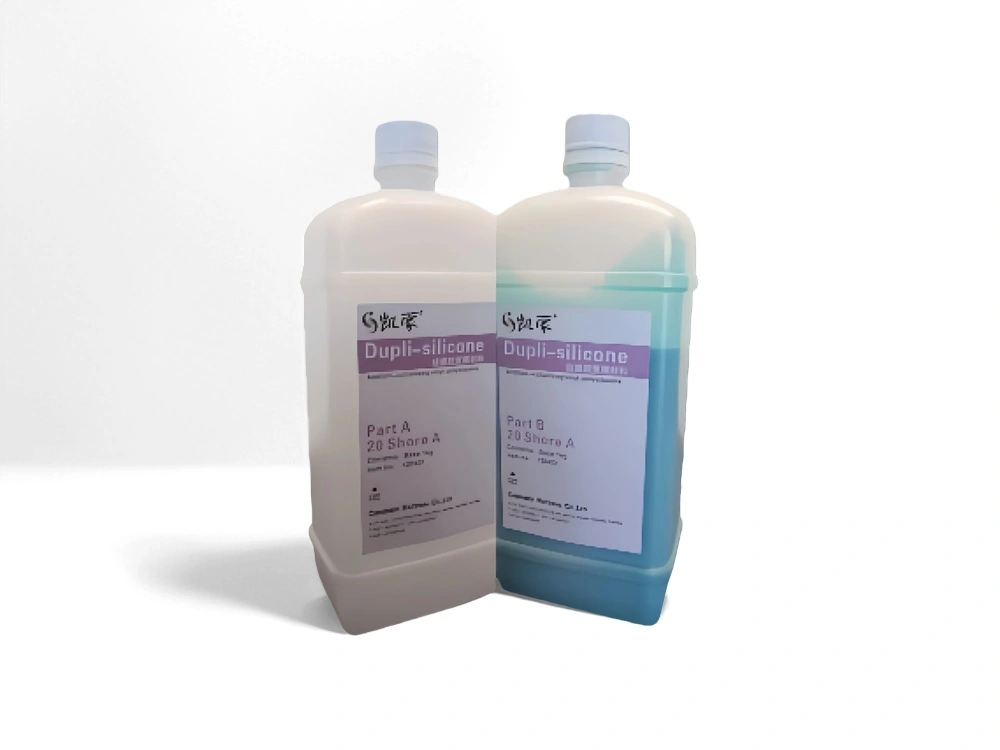
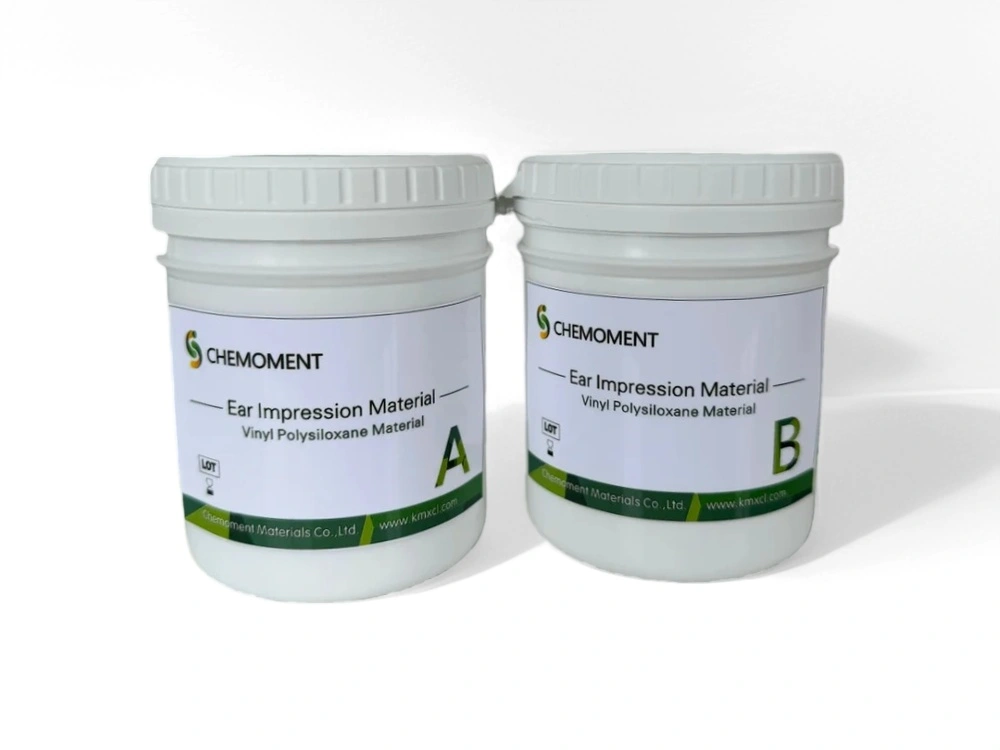
Chemoment supplies addition silicone and VPS/PVS materials for dental clinic, dental lab, ear impression, forensic, and metrology applications. Its product range includes light body, medium body, heavy body, putty, bite registration material, gingival mask silicone, and laboratory silicone materials through Chemoment’s addition silicone and VPS impression material product line.
Bite Registration Material Is Not a Repair Material
Silicone materials may look similar in cartridge form, but they are not interchangeable. Bite registration material records the occlusal relationship. It is not designed to repair a crown margin or replace light body VPS around a preparation.
A bite registration material should set quickly, trim cleanly, resist deformation, and stay stable during lab mounting. Light body VPS is chosen for fine detail reproduction around the preparation. Chemoment explains the difference in its article on putty vs bite registration material in clinical use.
Final Recommendation
Relining a crown impression with light body VPS may be acceptable only for a small, non-critical defect when the original impression is stable and can be reseated accurately. It is not a reliable way to rescue an impression with an unclear finish line, tearing, moisture contamination, tray movement, or visible distortion.
For crown accuracy, a clean retake is often the safer choice. The stronger approach is to expose and control the margin, use a compatible VPS system, seat the tray within the correct working time, and inspect the impression before it goes to the lab.
For clinics, labs, and distributors evaluating dental VPS materials, Chemoment provides addition silicone options for light body, medium body, heavy body, putty, bite registration, gingival mask, and laboratory applications. To request product information or samples, provide the required viscosity, working time, setting time, package format, intended application, and target market.
FAQ
Can light body VPS be used to repair a crown impression?
Only in limited non-critical areas. If the defect involves the finish line, subgingival margin, adjacent contact, or tray seating accuracy, a full retake is usually safer.
Is it safe to reline a crown margin with light body VPS?
In most cases, no. Relining a crown margin can create double margins, incomplete seating, hydraulic pressure, or distorted detail. The lab needs one clear margin, not a corrected area that requires guessing.
Why can a relined impression lead to poor crown fit?
If the tray does not reseat exactly, the repaired area may change the relationship between the preparation, adjacent teeth, and occlusion. This can lead to tight contacts, high bite, open margins, or poor seating.
Should light body VPS be used alone for crown impressions?
No. Light body VPS is mainly used for fine margin detail. It usually needs support from medium body or heavy body VPS to maintain tray stability and dimensional accuracy.
When should a crown impression be retaken instead of repaired?
Retake the impression when the margin is unclear, the wash is torn, moisture affected the preparation, the tray moved, or the lab cannot identify one clean finish line.