


How to Choose Ear Canal Impression Silicone for CIC and ITC Hearing Aid Applications
Why Ear Canal Impression Silicone Matters for CIC and ITC Applications
Choosing the right ear canal impression silicone is important for hearing aid manufacturers, hearing clinics, laboratories, distributors, and OEM buyers. For CIC and ITC hearing aid applications, the impression material must capture the ear canal shape accurately while maintaining stability during removal, storage, transportation, and downstream processing.
CIC and ITC hearing aids depend heavily on fit. If the ear impression is inaccurate, distorted, torn, or unstable after setting, the final device may require adjustment or remake. This can increase cost, delay delivery, and affect user comfort.
For this reason, buyers should not evaluate ear canal impression silicone only by color, packaging, or price. The material should be compared by application suitability, flow behavior, dimensional stability, setting time, elastic recovery, tear resistance, handling comfort, packaging format, and batch consistency.
A suitable material should support both accurate impression capture and practical workflow efficiency.

CIC and ITC Hearing Aid Impressions Have Different Requirements
CIC and ITC hearing aid applications are often discussed together, but they do not place exactly the same demand on impression materials.
CIC hearing aids sit deeper in the ear canal and require accurate reproduction of canal detail. The impression material must flow into the required area without losing stability, and it must recover properly during removal.
ITC hearing aids usually involve both the ear canal and concha area. The material needs stable body, reliable detail capture, and enough dimensional stability to support downstream shell design or earmold processing.
| Application | Main Impression Requirement | Material Selection Focus |
|---|---|---|
| CIC Hearing Aid | Accurate deeper canal detail | Flow, elastic recovery, dimensional stability, tear resistance |
| ITC Hearing Aid | Stable canal and concha reproduction | Body stability, working time, setting time, detail accuracy |
| Earmold / Hearing Aid Shell Work | Reliable impression for processing | Dimensional stability, handling comfort, storage stability |
| Distributor Supply | Product acceptance by clinics and labs | Packaging, documentation, batch consistency, sample feedback |
| OEM / Private Label | Specification and market positioning | Timing profile, packaging format, color, product consistency |
For CIC and ITC applications, the impression material must not be too difficult to handle, too slow to set, too weak during removal, or too unstable after curing. The correct balance depends on the user workflow and the target market.
Key Factors When Choosing Ear Canal Impression Silicone
Before selecting an ear canal impression silicone, buyers should compare the material based on practical performance rather than a single specification.
| Selection Factor | Why It Matters for CIC / ITC Applications |
|---|---|
| Dimensional Stability | Helps maintain the captured ear canal shape after setting |
| Flow Behavior | Supports canal detail capture without making application difficult |
| Body Stability | Helps the material stay controlled during placement |
| Setting Time | Affects user comfort and clinic workflow efficiency |
| Elastic Recovery | Helps reduce distortion when the impression is removed |
| Tear Resistance | Important when removing material from narrow or detailed canal areas |
| Surface Detail | Supports accurate downstream hearing aid shell or earmold processing |
| Handling Comfort | Affects acceptance by hearing clinics and technicians |
| Packaging Format | Impacts daily use, distribution, storage, and sample evaluation |
| Batch Consistency | Important for repeat orders and long-term supply reliability |
A material may perform well in one area but still create problems if another key property is weak. For example, good flow is useful, but if the material lacks body stability, it may become difficult to control. A short setting time is helpful, but if it gives the operator too little working time, it may reduce handling comfort.
Dimensional Stability Is a Core Requirement
Dimensional stability is one of the most important factors for CIC and ITC hearing aid impressions. After the material is removed, the captured shape should remain stable enough for further evaluation, scanning, model work, or shell production.
If the impression changes shape after setting, the downstream result may not match the user’s ear canal accurately. This can lead to poor fit, discomfort, acoustic leakage, or remaking work.
For buyers, dimensional stability should be considered in relation to:
- The time between impression taking and processing
- Storage and transportation conditions
- Whether the impression will be scanned or physically processed
- The level of canal detail required
- The need for repeated batch consistency
A suitable ear canal impression silicone should maintain form after setting and support stable downstream handling.
Flow and Body Stability Should Be Balanced
Ear canal impression silicone needs enough flow to capture anatomical detail, but it should also have enough body to remain controlled during application.
If the material is too stiff, it may not reproduce fine canal detail effectively. If it is too fluid, it may be harder to control during placement. The right balance helps the operator apply the material smoothly while maintaining shape stability before setting.
For CIC applications, controlled flow is important because deeper canal detail may be required. For ITC applications, both canal and concha areas must be reproduced, so the material should provide a stable body while still adapting to surface detail.
Buyers should evaluate flow and body stability under realistic application conditions, not only by comparing viscosity names.
Setting Time Should Match the Workflow
Setting time affects both user comfort and workflow efficiency. A material that sets too slowly may increase waiting time. A material that sets too quickly may give the operator insufficient working time for proper placement.
For hearing clinics, setting behavior should support a smooth and predictable procedure. For laboratories and distributors, stable setting behavior also supports repeatable user experience across batches.
When comparing setting time, buyers should consider:
- Whether the material allows enough time for placement
- Whether the setting time is comfortable for the user
- Whether the final set is stable before removal
- Whether different climates or room temperatures affect handling
- Whether the timing profile fits local user habits
The fastest setting material is not always the best choice. The better choice is the material that matches the actual workflow.
Elastic Recovery and Tear Resistance Affect Removal
Ear canal impressions may pass through narrow, curved, or detailed areas during removal. The material should recover its shape after deformation and resist tearing in thin or detailed sections.
Elastic recovery helps reduce distortion when the impression is removed. Tear resistance helps protect thin edges and detailed areas. Both properties are important for CIC and ITC applications because the final fit depends on accurate reproduction.
A material with poor recovery may lose shape after removal. A material with weak tear resistance may tear in narrow sections. Either problem can reduce the reliability of the impression and increase remake risk.
For buyers, these properties should be evaluated during sample testing, especially if the product will be used for deeper canal impressions or detailed hearing aid shell work.
Manual Mixing, Delivery Format, and Packaging Should Fit Daily Use
Ear canal impression silicone is often selected not only by performance, but also by how easily clinics and technicians can use it in daily work.
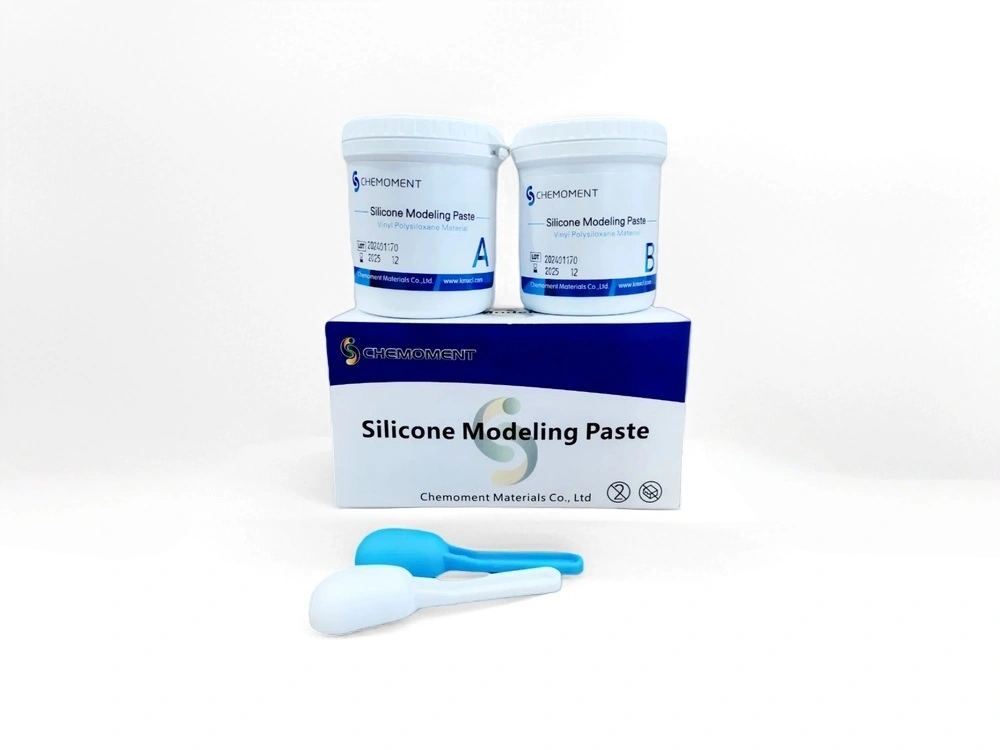
Manual mixing materials may be practical for certain users because they are simple, flexible, and suitable for sample testing or small-batch use. Other buyers may prefer packaging formats that support faster preparation, easier portion control, or private-label distribution.
Packaging should be considered together with user habits and target market needs. For distributors and OEM buyers, packaging is also part of product positioning.
| Packaging / Format Point | Why Buyers Should Check It |
|---|---|
| Mixing Method | Affects preparation time and user convenience |
| Unit Size | Affects clinic use, sample testing, and inventory planning |
| Labeling | Important for distributor and OEM sales |
| Storage Requirements | Affects shelf handling and transport planning |
| Instructions | Helps users apply the material correctly |
| Carton Packing | Important for bulk orders and export handling |
A technically suitable material may still be difficult to sell if the packaging does not match the target market.
Different Buyers Should Compare Different Priorities
Hearing clinics, hearing aid laboratories, distributors, and OEM buyers may evaluate the same material from different perspectives.
| Buyer Type | Main Concern | What to Compare |
|---|---|---|
| Hearing Clinics | Comfortable application and reliable impressions | Handling, setting time, flow, user comfort |
| Hearing Aid Labs | Accurate downstream processing | Dimensional stability, recovery, surface detail |
| Distributors | Repeat orders and market acceptance | Packaging, documentation, sample feedback, batch consistency |
| OEM Buyers | Product specification and market fit | Formula direction, timing profile, color, packaging, labeling |
| Hearing Aid Manufacturers | Fit accuracy and production efficiency | Detail reproduction, stability, processing compatibility |
This distinction matters because a material that works well for one buyer type may not be ideal for another. A hearing clinic may prefer easy handling and predictable setting. A lab may care more about stability after removal. A distributor may need clear packaging and reliable supply. An OEM buyer may focus on specification, branding, and target-market positioning.
How to Compare Ear Canal Impression Silicone Before Bulk Purchase
Before placing a larger order, buyers should evaluate the material under realistic conditions. A sample should not be judged only by appearance or first handling impression.
A practical comparison process may include:
- Confirm the application
Decide whether the material is mainly for CIC, ITC, earmold, hearing clinic use, lab processing, distributor supply, or OEM packaging. - Check flow and handling
The material should be easy to mix and apply while maintaining control during placement. - Evaluate setting behavior
The working and setting profile should fit the user’s workflow and comfort expectations. - Check detail reproduction
The material should capture canal and concha details required for the intended hearing aid application. - Assess removal performance
Elastic recovery and tear resistance should be suitable for narrow or detailed areas. - Review dimensional stability
The impression should remain stable after setting, especially if it will be stored, shipped, scanned, or processed later. - Confirm packaging and documentation
For distributors and OEM buyers, packaging, labeling, instructions, and technical documents should fit the target market.
This process helps buyers avoid selecting a material based on one attractive feature while overlooking practical performance issues.
Common Mistakes When Selecting Ear Canal Impression Silicone
Several sourcing mistakes can lead to poor fit, user complaints, or unstable repeat orders.
1. Choosing Only by Price
Price is important, but a low-cost material that causes distortion, tearing, or inconsistent handling can increase the total cost through remakes and complaints.
2. Ignoring the Difference Between CIC and ITC Use
CIC applications require deeper canal detail, while ITC applications need both canal and concha stability. One general material claim may not fully explain whether it is suitable for both.
3. Overlooking Setting Time
A material that sets too slowly may reduce efficiency. A material that sets too quickly may feel rushed. Timing must match real workflow.
4. Treating Packaging as a Minor Detail
Packaging affects usability, storage, distributor acceptance, and OEM market positioning. It should be reviewed before bulk purchase.
5. Testing Only One Sample Once
A single trial may not show batch consistency or user acceptance. Buyers should evaluate handling, setting, recovery, stability, and feedback under realistic use conditions.
Final Point
Ear canal impression silicone for CIC and ITC hearing aid applications should be selected by complete performance, not by a single claim. Dimensional stability, flow behavior, body stability, setting time, elastic recovery, tear resistance, packaging format, and batch consistency all affect the final result.
For CIC applications, accurate deeper canal detail and recovery during removal are especially important. For ITC applications, stable canal and concha reproduction should be considered. For distributors and OEM buyers, packaging, documentation, repeatability, and market fit also matter.
The best choice is not simply the fastest setting material or the lowest-priced option. The better choice is the material that fits the intended application, user workflow, and downstream hearing aid production process.
FAQ
1. What is ear canal impression silicone used for?
Ear canal impression silicone is used to capture the shape of the ear canal and related ear structures for hearing aid applications, earmolds, CIC devices, ITC devices, and related hearing care workflows.
2. Why is silicone selection important for CIC hearing aids?
CIC hearing aids sit deeper in the ear canal, so the impression must capture accurate canal detail and maintain shape after removal. Poor dimensional stability or tearing may affect the final device fit.
3. How are CIC and ITC impression requirements different?
CIC impressions focus more on deeper canal detail, while ITC impressions usually require stable reproduction of both the canal and concha area. Material flow, recovery, and dimensional stability should be compared according to the application.
4. What properties should buyers compare before choosing ear canal impression silicone?
Buyers should compare dimensional stability, flow, body stability, setting time, elastic recovery, tear resistance, surface detail, packaging format, documentation, and batch consistency.